
Quick Summary
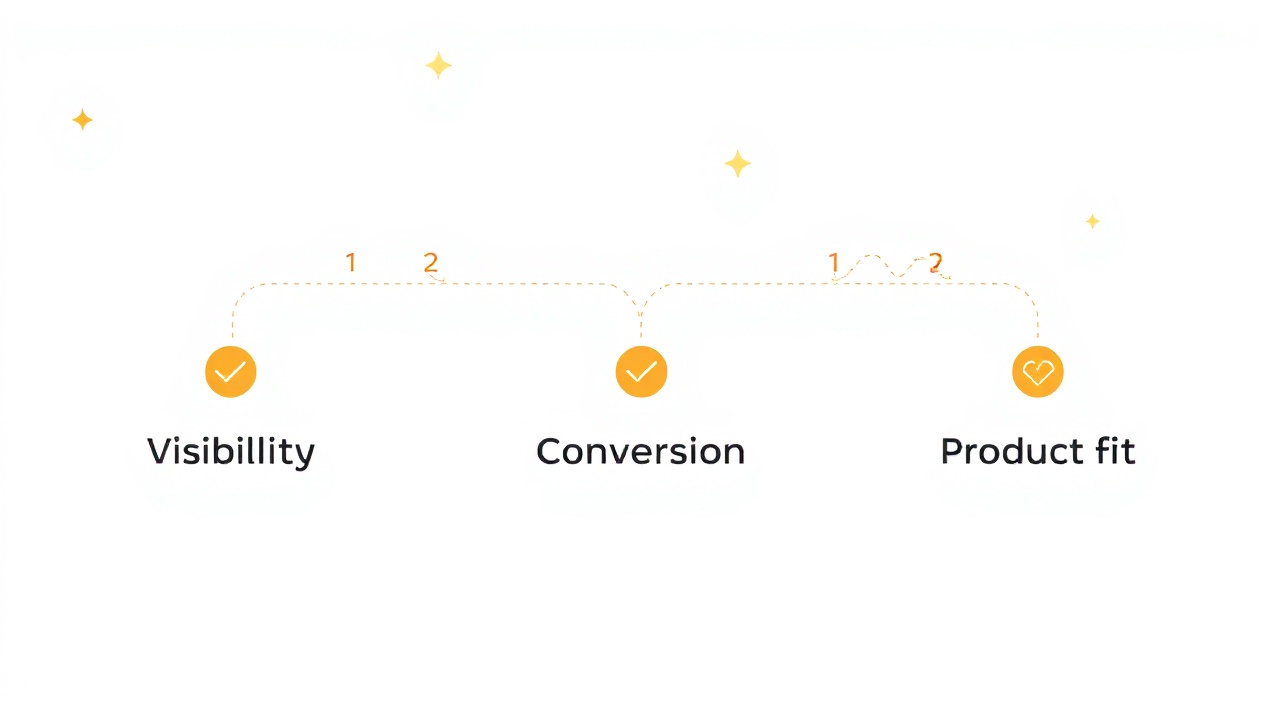
Your Etsy printables aren't selling for one of three reasons: buyers can't find you (search visibility), buyers find you but don't purchase (conversion), or nobody wants what you're selling (product-market fit). This diagnostic walkthrough helps you identify which failure point is killing your shop, then gives you specific fixes for each. Most sellers waste months tweaking the wrong thing—stop guessing and start diagnosing.
Can You Really Make Money With This in 2026?
As of early 2026, printables remain one of Etsy's most accessible income streams—but the market has matured significantly. The platform hosts over 7 million active sellers, with digital downloads representing approximately 12% of all listings. Competition is real, but so is demand: Etsy processed $13.2 billion in gross merchandise sales in 2024, with digital products growing 23% year-over-year.
The honest truth? Generic inspirational quote printables and basic planners are oversaturated. But sellers targeting specific niches—think ADHD-friendly meal planners, Montessori homeschool resources, or wedding timeline templates for destination elopements—consistently report $500-$3,000 monthly with shops under a year old.
The barrier to entry has dropped. AI tools now create professional-grade printables in minutes. This means more competition, yes, but also that you can test product ideas faster than ever. The sellers winning in 2026 aren't necessarily better designers—they're better at understanding why Etsy printables don't sell and fixing those specific problems.
How Etsy Printable Sales Actually Work
Understanding the mechanics helps you diagnose failures. Here's the path every sale follows:
Stage 1: Search Visibility
A buyer types a query. Etsy's algorithm evaluates your listing's title, tags, attributes, and recent performance. If you match the search intent and have decent listing quality scores, you appear in results. If not, you're invisible.
Stage 2: Click-Through
The buyer sees your thumbnail among 20-60 other results. Your main listing image and price must earn the click in under two seconds. Most listings die here.
Stage 3: Conversion
The buyer lands on your listing page. They evaluate your images, description, reviews, and perceived value. They either buy, save for later, or bounce.
Stage 4: Post-Purchase
Happy buyers leave reviews. Reviews boost your search ranking. Higher rankings mean more visibility. The flywheel spins—or stalls.
When you're getting Etsy no sales, the problem exists at one of these stages. Your job is figuring out which one.
Step-by-Step: How to Start Diagnosing and Fixing
Grab your Etsy Stats dashboard. You'll need your numbers for this.
Step 1: Check Your Search Visibility
What to measure: Go to Stats → Traffic Sources. Look at "Etsy search" specifically. Then check Stats → Listings to see individual listing views.
Diagnosis:
- Getting fewer than 10 views per listing per month? You have a visibility problem.
- Your listings aren't appearing in search results, or they're buried on page 15 where nobody scrolls.
The fix:
First, audit your titles and tags. Etsy's algorithm matches buyer queries to your exact words. Open an incognito browser, search for what your ideal buyer would type, and see if you appear. If not, you're targeting the wrong keywords.
Use all 13 tags. Each tag should be a multi-word phrase buyers actually search ("weekly meal planner printable" not just "planner"). Your title should front-load the most important search terms.
Next, check your listing quality score. Etsy penalizes listings with poor photos, incomplete attributes, or high bounce rates. Fill out every attribute field. Use all 10 image slots.
Finally, consider whether you're fighting impossible battles. Searching "printable planner" shows 500,000+ results. Searching "ADHD weekly planner with time blocking" shows 2,000. Long-tail keywords with clear buyer intent convert better anyway.
Step 2: Evaluate Your Click-Through Rate
What to measure: Compare impressions to visits in your listing stats. Industry benchmark is 1-3% click-through rate.
Diagnosis:
- High impressions but low visits? Buyers see you but don't click. Your thumbnail or price is the problem.
The fix:
Your main listing image is everything. Etsy shows a small square thumbnail. If your image is cluttered, hard to read at small size, or looks amateur, buyers skip you.
The difference between a shop making $200/month and $2,000/month often comes down to image quality—not product quality.
Create mockups showing your printable in context. A budget tracker displayed on an iPad next to a cup of coffee outperforms a flat screenshot every time. Use natural lighting, clean backgrounds, and professional staging.
If design isn't your strength, the Etsy Engine can generate listing images alongside your printables—useful when you need polished mockups quickly without Photoshop skills.
Also audit your pricing against competitors. Being $2 cheaper rarely matters. Being $5 more expensive with better images often wins. But being $12 for something competitors sell at $4 requires significant perceived value justification.
Step 3: Analyze Your Conversion Rate
What to measure: Visits divided by orders. A healthy printable listing converts at 1-5%.
Diagnosis:
- Getting visits but not purchases? People are interested but not convinced. This is a conversion problem.
The fix:
Start with your secondary images. Buyers click through all of them. Show multiple pages of your printable. Include a "what's included" graphic listing every file. Add size dimensions clearly. Show print examples on actual paper.
Rewrite your description for scanners, not readers. Use short paragraphs, bullet points, and bold text for key features. Answer common questions before they're asked: file format, sizes included, whether it's editable, how to print.
Address the review gap. New listings without reviews convert poorly. Consider temporarily pricing your first few listings lower to generate initial sales and reviews. Once you have 10+ five-star reviews, conversion rates typically double.
Check your shop policies and "About" section. Buyers purchasing from new shops look for trust signals. A complete shop with cohesive branding and professional policies converts better than a sparse one.
Step 4: Assess Product-Market Fit
What to measure: If visibility and conversion seem fine but sales are still absent, your product might not have sufficient demand.
Diagnosis:
- Decent views, reasonable conversion metrics, but total sales near zero? Either the market is too small or too competitive.
The fix:
Validate demand before creating. Search Etsy for your product idea. Look at how many sellers have 1,000+ sales with similar items. If nobody's selling well, that's often a red flag—not an untapped opportunity.
Use Etsy's search bar autocomplete to find what buyers actually type. These suggestions come from real search volume. Build products around these phrases.
Consider bundling. A single printable budget tracker might not sell. A "Complete Financial Wellness Bundle" with 15 printables at $12.99 offers perceived value that single items can't match.
Niche down ruthlessly. Instead of "wedding planner printable," try "backyard wedding planner for DIY brides" or "minimalist elopement planning checklist." The Etsy Engine helps identify trending niches and generates product concepts tailored to current demand—useful when you've hit dead ends with generic ideas.
Step 5: Build Outside Traffic Sources
Etsy rewards listings that bring external traffic. Shops with Pinterest strategies or niche blogs consistently outrank shops relying solely on Etsy search.
Create pins showcasing your printables. Pinterest users actively search for printable planners, wall art, and organizational tools—often more than Etsy users.
Consider building a simple website showcasing your printable collection with blog content targeting buyer searches. Tools like Site Engine let you spin up a functional site in under a minute, creating another discovery channel that feeds traffic back to your Etsy shop.
Realistic Earnings & Timeline
| Milestone | Typical Timeline | Expected Monthly Revenue | Requirements |
|---|---|---|---|
| First sale | 2-8 weeks | $5-$20 | 10+ optimized listings |
| Consistent trickle | 2-4 months | $50-$150 | 25+ listings, first reviews |
| Part-time income | 4-8 months | $300-$800 | 50+ listings, 50+ reviews |
| Significant income | 8-18 months | $1,000-$3,000 | 100+ listings, niche authority |
| Full-time potential | 18-36 months | $3,000-$10,000+ | Multiple proven niches, bundled offers |
These numbers assume weekly listing additions and continuous optimization. Sellers who upload 20 printables then wait rarely see meaningful results. Consistency compounds.
Mistakes That Kill Beginners
1. Ignoring Etsy SEO fundamentals
Creating beautiful printables then using titles like "Cute Planner!!" guarantees invisibility. Every character of your title and all 13 tags should target searchable phrases. This single Etsy printable mistake kills more shops than bad products.
2. Copying saturated products exactly
Seeing a successful listing and making a nearly identical version puts you last in line. The original has reviews, sales history, and algorithm trust. You have nothing. Differentiate or die.
3. Using flat product images instead of mockups
Screenshots of your printable look amateur. Professional mockups showing products in lifestyle settings increase conversions 3-5x. This is non-negotiable in 2026.
4. Pricing based on effort, not value
You spent 10 hours making a printable, so you price it at $15. But competitors sell similar items at $5. Buyers don't care about your effort—they care about the market rate. Research pricing before creating, not after.
5. Giving up before the algorithm recognizes you
Etsy needs 2-3 months to properly rank new shops. Most quitters abandon ship at 6 weeks—right before traction typically begins. If you're going to fix Etsy listings, commit to a realistic timeline.
Frequently Asked Questions
Why are my Etsy printables getting views but no sales?
Views without sales typically indicate a conversion problem. Your listing images, pricing, or product descriptions aren't compelling enough to close the sale. Review your main photo quality, ensure your price matches perceived value, and add lifestyle mockups showing the printable in use.
How long does it take for Etsy printables to start selling?
Most printable shops take 3-6 months to gain traction. New listings need time to index in Etsy search and accumulate the reviews that boost ranking. Consistent listing additions—2-4 per week—accelerate this timeline significantly.
What printables sell best on Etsy in 2025?
Top performers include wedding planning bundles, small business templates (invoices, social media planners), homeschool curriculum packets, budget trackers, and seasonal wall art. Products solving specific, urgent problems consistently outperform generic decorative prints.
Do I need expensive software to create sellable printables?
No. Canva's free tier handles most printable creation. However, professional-looking results require understanding design principles, proper dimensions, and print-ready PDF export settings. AI tools can now generate market-ready printables without design experience.
How many printable listings do I need to make consistent sales?
Data from successful shops suggests 50-100 optimized listings create reliable baseline income. However, 10 highly targeted listings in a proven niche can outperform 200 generic ones. Quality and niche focus matter more than raw listing count.
The Bottom Line
Your printables aren't selling because of visibility, conversion, or product-market fit—and now you know how to identify which. Stop making random tweaks and start making diagnostic ones. The shops winning on Etsy aren't luckier; they're just better at finding and fixing their specific failure points.