Quick Summary
Selling printables on Etsy remains one of the lowest-barrier entry points into passive income for creative beginners in 2026. You'll design digital files once—planners, trackers, wall art, worksheets—then sell unlimited copies without inventory, shipping, or restocking. This guide walks you through finding profitable niches, creating designs fast (even without experience), and optimizing your listings so Etsy's algorithm does the selling for you.
Can you really make money with this in 2026?
As of early 2026, Etsy hosts over 9 million active sellers, and digital downloads represent one of the fastest-growing categories on the platform. The printables market specifically generates an estimated $400+ million annually on Etsy alone, with individual sellers reporting anywhere from coffee money to six-figure incomes.
Here's what's changed: competition has increased, but so has buyer demand. Remote work normalization means more people printing home office organization tools. Homeschooling continues its post-pandemic growth. And the "aesthetic planner" trend shows no signs of slowing—Pinterest searches for printable planners increased 34% year-over-year heading into 2026.
The honest truth? You won't get rich overnight. But an etsy printables business offers something rare: genuinely passive income potential. Once your listings rank, they can generate sales for years with minimal maintenance. Sellers with 50-100 well-optimized listings commonly report $500-2,000 monthly in semi-passive revenue.
The window hasn't closed. It's just shifted toward rewarding sellers who understand niche selection and Etsy SEO over those who simply upload generic designs.
How selling printables on Etsy actually works
The mechanics are refreshingly simple, which is exactly why this business model appeals to crafty beginners.
You create a digital file—a PDF, PNG, or sometimes editable template—that customers can download and print at home or at a local print shop. Think budget spreadsheets, wedding invitation suites, wall art prints, children's activity pages, or small business invoice templates.
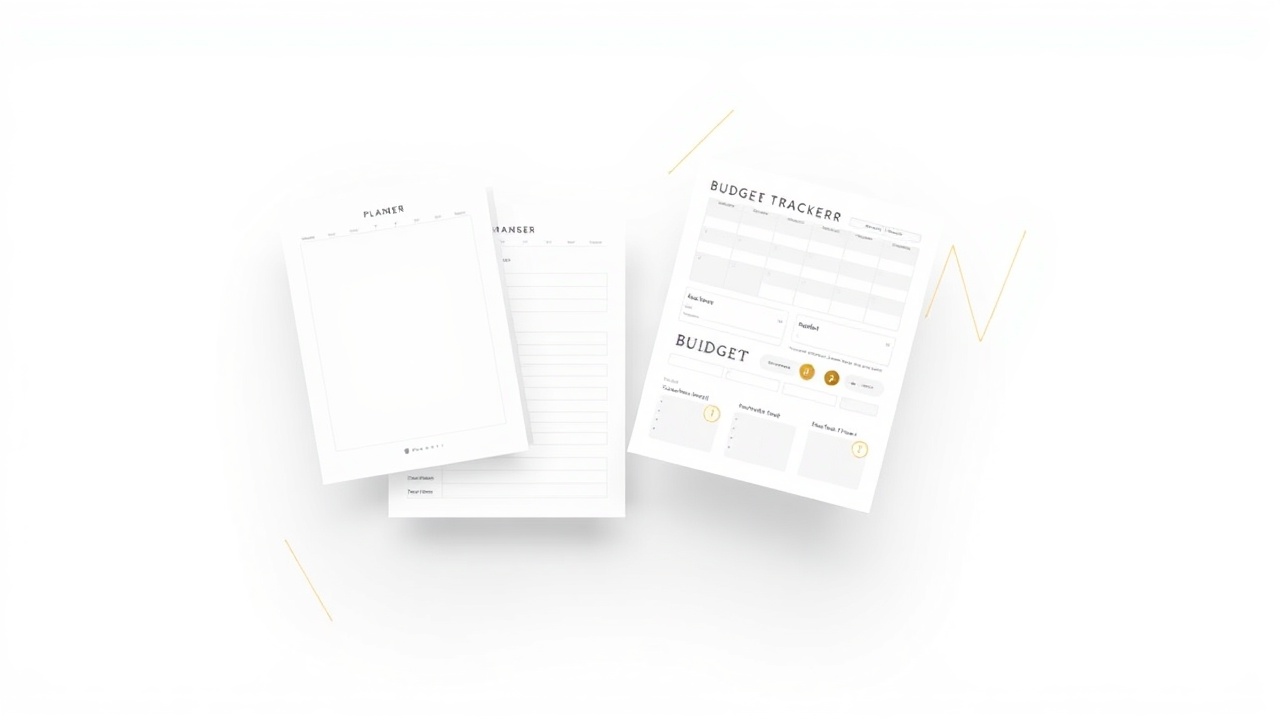
When someone purchases your listing, Etsy automatically delivers the file. No shipping labels. No trips to the post office. No inventory sitting in your garage. The customer gets instant access, and you collect payment minus Etsy's fees (roughly 8-10% total including transaction and processing fees).
Your job shifts from fulfillment to two core activities:
- Creating designs people actually want to buy — This means research before creation, not the other way around.
- Getting your listings found — Etsy is a search engine. Your listings need optimization just like a website needs SEO.
The beautiful part? A single printable you spend two hours creating can sell hundreds or thousands of times. That's the leverage that makes etsy digital downloads attractive compared to physical products.
Step-by-step: how to start your printables business
Step 1: Research profitable niches before you design anything
This is where 90% of beginners fail. They create what they find pretty instead of what buyers are searching for.
Open Etsy and start typing broad terms: "printable planner," "budget template," "wedding checklist." Watch the autocomplete suggestions—these represent actual search volume. A suggestion like "printable planner 2026 minimalist" tells you people are searching that exact phrase.
Look for niches with these characteristics:
- High search volume (lots of autocomplete suggestions)
- Moderate competition (not dominated entirely by mega-sellers with 50,000+ sales)
- Clear pain points (organization, planning, tracking, learning)
- Recurring need (annual planners, weekly meal plans, monthly budgets)
The best printables to sell solve specific problems for specific people. "Printable planner" is too broad. "ADHD-friendly daily planner with time blocking" serves a defined audience willing to pay premium prices.
Step 2: Validate demand with competitive analysis
Before designing, confirm people are buying—not just browsing.
Search your target keyword on Etsy. Filter by "Digital downloads" and sort by "Top customer reviews" or examine bestseller badges. Look at the top 10-15 results:
- How many reviews do they have? (Reviews ≈ 1-3% of sales, so 100 reviews suggests 3,000-10,000 sales)
- What price points dominate?
- What do negative reviews complain about? (This reveals gaps you can fill)
If the top sellers have tens of thousands of sales but newer shops with under 1,000 sales also appear on page one, the niche has room for newcomers. If page one is exclusively mega-sellers, pick a more specific sub-niche.
Step 3: Create your printables efficiently
You don't need Adobe Illustrator or design school credentials. Canva's free tier handles most printable creation, though Canva Pro ($13/month) unlocks premium elements and features worth the investment once you're committed.
For speed and consistency, consider AI-assisted design tools. Etsy Engine generates market-ready printable designs based on trending Etsy categories, which eliminates the blank-canvas paralysis most beginners face. You'll get designs aligned with what's actually selling, not just what looks nice in a vacuum.
Design tips that increase perceived value:
- Use consistent color palettes across product lines
- Create bundles (a single budget tracker vs. a "Complete Financial Planning Kit" with 12 templates)
- Design at 300 DPI for crisp printing
- Include multiple sizes (US Letter and A4) to serve international buyers
- Add simple instructions for printing and use
"The sellers who win aren't better designers—they're better researchers who create adequate designs for hungry markets."
Step 4: Set up your Etsy shop properly
Creating your Etsy account takes about 15 minutes. Choose a shop name that's memorable, hints at your niche, and doesn't lock you into a single product type ("SarahsPlannerCo" works better than "WeddingPrintablesByS" if you might expand later).
Complete your shop policies, especially around digital downloads. Make clear that no refunds are offered once files are downloaded—this is standard for digital products and Etsy supports it.
Set up Etsy Payments to receive funds. You'll need a bank account and tax information. Etsy deposits earnings on a regular schedule, typically weekly.
Step 5: Optimize listings for Etsy search (this is non-negotiable)
Your listing's visibility depends on Etsy SEO. Here's what matters:
Title (140 characters max): Front-load your primary keyword. Include secondary descriptors buyers search for. Example: "Budget Planner Printable | Monthly Finance Tracker | Savings Goal Worksheet | A4 US Letter | Instant Download"
Tags (13 available): Use all 13. Each tag can be up to 20 characters. Include:
- Primary keyword phrase
- Synonyms ("budget planner" + "finance tracker" + "money organizer")
- Specific use cases ("debt payoff" + "savings tracker")
- Audience descriptors ("minimalist" + "simple" + "beginner")
Description: Write for humans first, but naturally include keywords in the opening paragraph. Explain what's included, file formats, sizes, and how buyers will use the product.
Categories and attributes: Select the most specific category available. Fill out every attribute Etsy offers.
Step 6: Create scroll-stopping mockups and thumbnails
Your thumbnail is your listing's first impression. Buyers scroll through dozens of results—you have maybe two seconds to earn a click.
Show your printable in context: a budget tracker on a clipboard with a pen, wall art in a styled frame, a planner page on a desk with coffee. This helps buyers visualize the product in their lives.
Tools like Canva offer mockup templates, or you can purchase mockup bundles from other Etsy sellers. For listings that include preview images or video thumbnails (which boost conversion), a specialized tool ensures visual consistency. If you're creating any video content to promote your shop, Thumbnail Engine helps generate attention-grabbing preview images optimized for clicks.
Step 7: Price strategically, not emotionally
New sellers often underprice, thinking lower prices mean more sales. This backfires. Cheap prices signal low value and attract difficult customers.
Research competitor pricing in your exact niche. If quality planners sell for $5-12, pricing at $2 makes buyers suspicious. Start in the middle range, then adjust based on conversion data.
Consider tiered offerings:
- Single template: $3-5
- Small bundle (3-5 templates): $7-12
- Complete kit (10+ templates): $15-25
Bundles increase average order value and provide better perceived value to customers.
Step 8: Launch with enough listings to gain traction
One or two listings won't move the needle. Etsy's algorithm favors shops with depth. Aim to launch with 15-20 listings minimum, ideally within your first month.
This doesn't mean 20 unrelated products. Create variations within your niche: different color schemes, sizes, or complementary products (a meal planner, grocery list, recipe card set, and pantry inventory tracker form a logical collection).
Realistic earnings & timeline
| Milestone | Typical Timeline | Expected Monthly Revenue |
|---|---|---|
| First sale | 2-6 weeks | $3-15 |
| 20 listings, initial traction | 1-2 months | $50-150 |
| 50 listings, consistent sales | 3-4 months | $200-500 |
| 100+ listings, established shop | 6-12 months | $500-2,000 |
| Mature shop, strong SEO | 12-24 months | $1,000-5,000+ |
These numbers assume consistent effort in creation and optimization—not uploading 20 listings and disappearing. Top performers treat this as a real business, reinvesting early revenue into better tools, more listings, and advertising.
The "passive" income claim comes with an asterisk: it becomes passive after you've built a catalog of optimized listings. The first 3-6 months require active work. After that, maintenance drops to a few hours weekly while sales continue.
Mistakes that kill beginners
1. Designing before researching. Creating beautiful printables nobody searches for is the most common and most fatal mistake. Always start with keyword research, not inspiration boards.
2. Ignoring Etsy SEO entirely. Your listings compete in a search engine. Without keyword-optimized titles, tags, and descriptions, your products remain invisible regardless of quality.
3. Using copyrighted elements. That cute Disney font or trademarked phrase will get your shop shut down. Verify commercial licenses for every element—fonts, graphics, illustrations. When in doubt, leave it out.
4. Giving up before reaching critical mass. Most sellers quit before listing 30 products. Etsy's algorithm needs data to work with. Shops under 20 listings rarely gain meaningful traction.
5. Competing solely on price. Racing to the bottom attracts bargain hunters and destroys margins. Compete on niche specificity, design quality, and bundle value instead.
Frequently asked questions
How much does it cost to start selling printables on Etsy?
Starting an Etsy printables business costs approximately $15-50 upfront. This includes Etsy's $0.20 listing fee per item, optional Canva Pro subscription ($13/month), and potentially a few dollars for mockup templates. You can start with free tools and scale up as you earn.
Do I need graphic design experience to sell printables?
No design experience is required. Tools like Canva offer drag-and-drop templates specifically for printables. AI-powered tools can generate professional designs in minutes. Many successful Etsy printable sellers started with zero design background and learned as they went.
What are the best printables to sell on Etsy in 2026?
The best printables to sell include wedding planning bundles, budget trackers, homeschool worksheets, small business templates, and digital planners. Evergreen niches with recurring demand outperform trendy items. Look for problems people need solved repeatedly.
How long does it take to make your first sale on Etsy?
Most new sellers make their first sale within 2-6 weeks if they have 15-20 optimized listings. Some sellers report sales within days, while others wait months. The key factors are niche selection, listing optimization, and competitive pricing during your launch phase.
Can you sell printables made with Canva on Etsy?
Yes, you can sell printables made with Canva on Etsy, but with conditions. You must use Canva Pro and only use elements marked for commercial use. You cannot resell Canva templates as-is—you must create original designs using their elements. Always check the license for each element you use.
The bottom line
Selling printables on Etsy in 2026 isn't a get-rich-quick scheme—it's a legitimate business model that rewards research, consistency, and optimization over raw design talent. Start with proven niches, create efficiently using modern tools, and treat Etsy SEO as non-negotiable. The sellers building real income from etsy digital downloads aren't the most artistic; they're the most strategic.
Get the AI tools to do all of this — free
Create a free Elite Engines account and get 5 AI money-making engines instantly. No credit card.