
Quick Summary
Writing for money online in 2026 is more accessible than ever—but the game has changed. You no longer compete on raw typing speed; you compete on strategy, editing, and how well you leverage AI to multiply your output. This guide walks you through the real paths to freelance writing income, where to sell articles, and exactly how beginners can hit their first $1,000 month faster than any previous generation of writers.
Can you really make money with this in 2026?
As of early 2026, the online writing economy is worth over $15 billion globally—and growing. Content marketing budgets haven't shrunk; they've shifted. Businesses that once hired full-time writers now contract freelancers who can deliver faster, cheaper, and at scale.
Here's what's different now: AI hasn't killed writing jobs. It's killed slow writing jobs. The writers earning $5,000-$15,000 per month aren't typing faster—they're producing more polished content in less time because they've integrated AI into their workflow.
The data backs this up. According to Payoneer's 2025 freelancer report, content writers using AI tools reported a 47% increase in monthly output and a 31% increase in effective hourly rates compared to those working without AI assistance.
So yes—you can absolutely get paid to write in 2026. But you need to approach it as a strategic skill, not just a typing exercise.
How making money writing online actually works
Let's strip away the mystique. Here's the mechanics of how writers actually get paid online:
Model 1: Client Services (Freelancing)
You write content for businesses, agencies, or publications. They pay per word, per article, or per project. This is the fastest path to your first dollar because someone else already has the audience—they just need the words.
Model 2: Platform Publishing
You publish on platforms like Medium, Substack, or Newsbreak that share ad revenue or subscription fees with writers. Slower to start, but builds passive income over time.
Model 3: Your Own Assets
You create content for your own blog, newsletter, or niche site—then monetize through ads, affiliates, or digital products. Highest ceiling, longest runway.
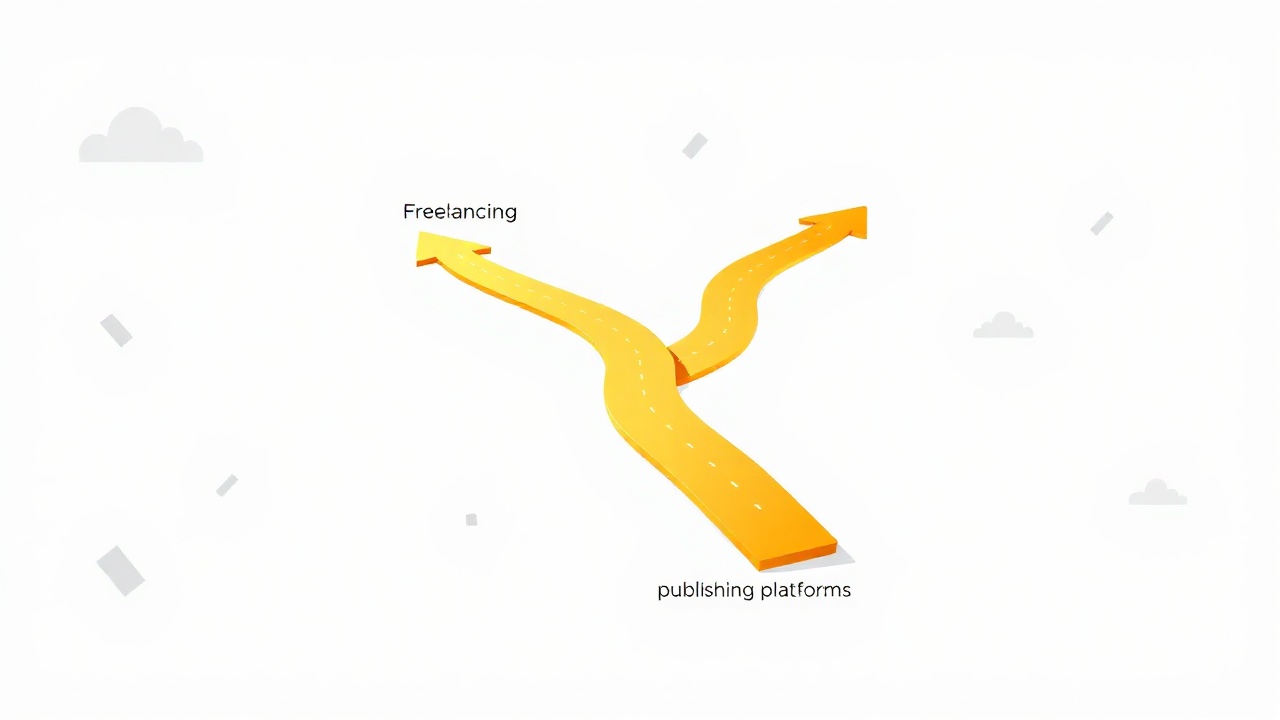
Most successful writers in 2026 combine all three. They freelance for immediate cash flow, publish on platforms to build authority, and slowly construct their own digital real estate.
The key insight: words are inventory. The more quality content you can produce, the more income streams you can feed. This is why AI tools have become non-negotiable for serious writers.
Step-by-step: how to start making money writing online
Step 1: Choose your starter niche (Week 1)
Generalist writers compete with millions. Niche writers compete with dozens.
Pick a topic where you have either:
- Professional experience (accounting, nursing, real estate)
- Deep personal interest (fitness, gaming, personal finance)
- Willingness to learn intensively (SaaS, crypto, AI itself)
High-paying niches in 2026: B2B SaaS, fintech, healthcare, cybersecurity, sustainability, and AI applications. But don't chase money into a niche you'll hate—burnout kills more writing careers than low rates.
Step 2: Build your portfolio in 48 hours (Week 1)
No clips? No problem. You don't need permission to create samples.
Write 3-5 articles in your niche as if you'd been hired. Make them genuinely good—research-backed, well-structured, and edited clean. These become your portfolio.
Here's where most beginners waste weeks: writing samples from scratch is slow. If you want to accelerate, the PLR Engine gives you access to 100,000+ done-for-you articles plus an AI rewriter. Find articles in your niche, rewrite them in your voice, and you've got polished samples in hours instead of days.
Host your portfolio on a simple site. Nothing fancy—Notion, Contently's free portfolio, or a basic WordPress page works fine.
Step 3: Set up your writing production system (Week 2)
Professional writers don't stare at blank pages. They have systems.
Your production system needs three components:
- Research workflow — How you gather information and organize sources
- Draft generation — How you get words on the page quickly
- Editing process — How you polish drafts into client-ready work
For long-form content like blog posts, case studies, and guides, tools like the Content Engine can generate SEO-ready first drafts on autopilot. Your job shifts from writing every word to directing the strategy and refining the output. This is how 2026 writers produce 3-5x more content without burning out.
"The writers earning $10K+ per month aren't better at typing—they're better at systems. AI handles the first 70%. Human judgment handles the crucial 30% that clients actually pay premium rates for."
Step 4: Find your first paying clients (Weeks 2-4)
Here's where to sell articles as a beginner:
Job boards and marketplaces:
- Contently, Skyword, ClearVoice (application-based, higher quality)
- LinkedIn ProFinder (direct client connections)
- Peak Freelance job board (curated, writing-specific)
- Superpath (content marketing focus)
Direct outreach:
Identify 20 businesses in your niche with active blogs. Find the marketing manager or content lead on LinkedIn. Send a short, specific pitch referencing their existing content and suggesting an article idea.
Template that works: "Hey [Name], I noticed [Company]'s blog covers [topic]. I've got an idea for a piece on [specific angle] that could rank for [keyword]. Happy to share an outline if you're taking pitches."
Send 5-10 of these daily. A 5% response rate means you'll land conversations within two weeks.
Platform publishing (parallel track):
While pitching clients, start publishing on Medium or Substack. This builds your public portfolio and can generate small checks while you hunt for freelance writing income.
Step 5: Deliver and stack testimonials (Month 2-3)
Your first client matters more than your first check. Overdeliver. Hit deadlines early. Communicate proactively.
After each project, ask for two things:
- A short testimonial (2-3 sentences for your portfolio)
- A referral ("Know anyone else who needs content help?")
Referrals are how online writing jobs compound. One happy client becomes three. Three become ten.

Step 6: Scale your output without scaling your hours (Month 3+)
Once you have steady client work, the bottleneck becomes production capacity. You can:
A) Raise rates — The traditional path. Works, but has ceiling limits.
B) Increase output with AI — The 2026 path. Produce more content at the same quality level.
C) Build owned assets — Use your writing skills to create income you own.
For option C, consider launching a niche blog or review site. The Site Engine lets you build a review site, blog, or sales page in about 60 seconds—eliminating the technical barrier that stops most writers from owning their platforms. Combine this with your content skills, and you've got an asset that earns while you sleep.
Realistic earnings & timeline
Let's be honest about numbers. These ranges assume consistent effort (15-25 hours/week) and use of modern AI tools:
| Timeline | Monthly Income | What's Happening |
|---|---|---|
| Month 1-2 | $0-$500 | Building portfolio, pitching, landing first clients |
| Month 3-4 | $500-$1,500 | Regular client work, refining processes |
| Month 5-6 | $1,500-$3,000 | Repeat clients, referrals, rate increases |
| Month 7-12 | $3,000-$6,000 | Established reputation, premium clients, diversified income |
| Year 2+ | $6,000-$15,000+ | Agency clients, retainers, owned assets producing passive income |
The spread is wide because effort and niche matter enormously. A writer in the cybersecurity niche working 30 hours/week will out-earn a generalist working 10 hours/week by 5-10x.
Critical point: most beginners quit in month 2-3 when results feel slow. The writers who break through are the ones who keep pitching and publishing through the plateau.
Mistakes that kill beginners
1. Pricing too low, then resenting clients
Undercharging feels safe, but it attracts demanding clients and burns you out. Start at $0.08-$0.10/word minimum for blog content—even as a beginner. Serious clients understand quality costs money.
2. Waiting for perfection before publishing
Your first samples won't be your best. Ship them anyway. A visible, imperfect portfolio beats an invisible, perfect one every time.
3. Treating AI as a replacement instead of a multiplier
Writers who paste raw AI output get caught, lose clients, and tank their reputations. AI generates raw material. You provide the strategy, fact-checking, voice, and final polish. That's the job now.
4. Ignoring email as a skill
Email copywriting is one of the highest-paying online writing jobs, yet most beginners never learn it. A single email sequence can pay $500-$2,000. Tools like the Email Engine can help you practice and produce email content faster—valuable whether you're writing for clients or building your own list.
5. Relying on one income stream
Platforms change algorithms. Clients disappear. Diversify early: client work + platform publishing + owned assets. Three streams beat one.
Frequently asked questions
How much can a beginner make writing online?
Most beginners earn $500-$2,000 per month within their first 6 months. With consistent effort and AI tools to increase output, hitting $3,000-$5,000 monthly is realistic by month 12.
Do I need a degree to get paid to write online?
No degree required. Clients care about your portfolio, reliability, and results—not credentials. A strong sample collection matters far more than formal education.
What types of writing pay the most online?
Technical writing, SaaS content, financial services, and B2B copywriting typically pay $0.15-$0.50+ per word. Email copywriting and sales pages can command $500-$2,000+ per project.
Is freelance writing still profitable with AI in 2026?
Yes—but the model has shifted. Writers who use AI to increase their speed and output earn more than ever. Those competing on volume alone struggle. Strategy and editing skills now matter most.
Where can I sell articles as a beginner?
Start with Contently, Skyword, ClearVoice, LinkedIn ProFinder, and direct cold outreach to businesses. Medium's Partner Program and Substack also let you monetize your own audience directly.
The bottom line
Learning how to make money writing online in 2026 isn't about becoming a faster typist—it's about becoming a smarter content strategist who leverages AI to multiply output while maintaining quality. The paths are clear: freelance for cash flow, publish for authority, build for ownership. The only variable is whether you'll execute consistently enough to break through the early plateau.
Get the AI tools to do all of this — free
Create a free Elite Engines account and get 5 AI money-making engines instantly. No credit card.