
Quick Summary
Done-for-you services represent one of the fastest paths to consistent online income for service providers who want predictable revenue without trading endless hours for dollars. By packaging repeatable deliverables with fixed pricing, you escape the custom quote trap and build something that scales. AI tools have made delivery faster than ever, meaning you can serve more clients while maintaining quality. This guide shows you exactly how to structure, price, and sell DFY packages that clients actually want to buy.
Can you really make money with this in 2026?
As of early 2026, the done-for-you services market is experiencing significant growth driven by two converging trends: business owners have less time than ever, and they're increasingly willing to pay for completed solutions rather than DIY courses.
The data supports this shift. The global business process outsourcing market exceeded $280 billion in 2025, with small business outsourcing growing at roughly 8% annually. More relevant to individual service providers: platforms like Upwork reported that fixed-price project contracts (the foundation of DFY packages) grew 23% faster than hourly contracts in the past year.
What's changed specifically in 2026 is the delivery side. AI tools now handle 60-80% of the production work for many common services—website builds, email sequences, lead magnets, content creation. This means you can deliver professional results in hours instead of days, dramatically improving your effective hourly rate while keeping prices competitive.
The honest answer: yes, you can make real money with done-for-you services in 2026, but the opportunity favors those who leverage AI for delivery speed while focusing their human expertise on strategy and client relationships.
How done for you services actually work
The DFY business model operates on a simple principle: you sell completed outcomes, not your time.
Here's the mechanical breakdown:
You create a standardized offer. Instead of asking "what do you need?" and building custom quotes, you define exactly what clients get. A DFY email sequence package might include 7 emails, subject lines, and one revision round. A DFY website package might include 5 pages, mobile optimization, and basic SEO setup. The scope is fixed before anyone pays.
You set fixed pricing. No estimates, no hourly tracking, no scope creep negotiations. The price is the price. Clients know exactly what they're paying, and you know exactly what you're delivering.
You systematize delivery. This is where AI transforms the model. Tasks that once required hours of manual work—drafting copy, designing layouts, creating assets—can now be templated and accelerated. You build processes that let you deliver consistent quality in a fraction of the traditional time.
You sell the package repeatedly. Unlike custom projects that start from scratch each time, your DFY packages use the same frameworks, templates, and workflows. Client #50 takes roughly the same effort as client #5.
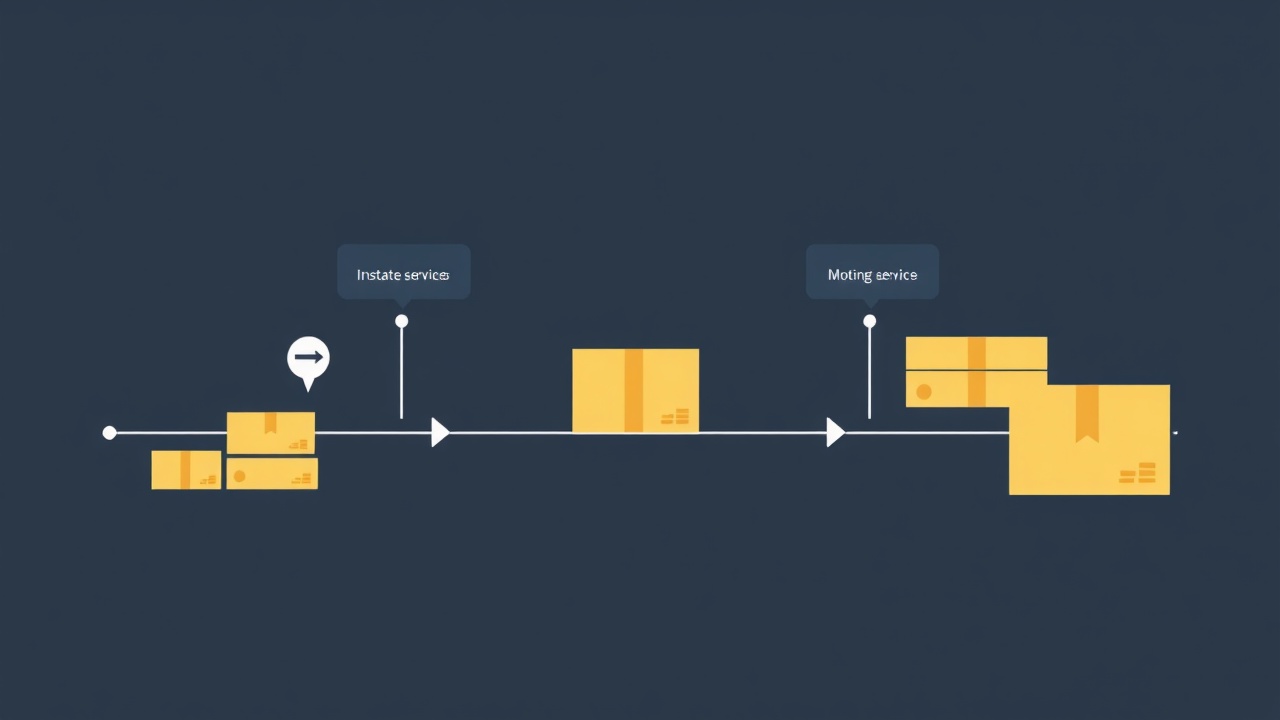
The productized service approach differs from traditional freelancing in one critical way: you're not selling your availability, you're selling a specific transformation. Clients don't hire you for 10 hours of work—they hire you to have a functioning email sequence or a complete lead magnet by next Tuesday.
This shift changes everything about how you market, price, and deliver.
Step-by-step: how to start
Step 1: Choose your DFY niche based on three criteria
Not all services work equally well as DFY packages. The best candidates share three characteristics:
- Repeatability: You can deliver essentially the same thing to multiple clients with minor customization
- Clear completion: There's an obvious "done" state the client can verify
- Painful alternative: Doing it themselves would cost the client significant time or frustration
High-potential DFY services for 2026 include: website builds, email sequences, lead magnets, sales pages, content calendars, social media setups, and funnel creation.
Pick one. Not three, not five. One service you can master and systematize.
Step 2: Define your package scope with surgical precision
Vague offers kill DFY businesses. "I'll build you a website" invites endless revision requests and scope disagreements. "I'll build you a 5-page Starter site with homepage, about, services, contact, and blog—delivered in 5 business days" is sellable.
Document exactly:
- What's included (specific deliverables)
- What's not included (boundaries matter)
- Timeline for delivery
- Number of revision rounds
- Required inputs from the client
The tighter your scope, the faster you can deliver and the easier you can sell dfy packages without lengthy sales calls.
Step 3: Build your delivery system before you sell
Here's where most beginners fail: they sell first, then scramble to deliver. Flip that sequence.
Create your production workflow using AI tools that handle the heavy lifting. If you're offering website builds, tools like Site Engine let you generate complete review sites, blogs, or sales pages in under a minute—giving you a professional foundation to customize for each client rather than building from scratch.
For lead magnet packages, the process is similar. Instead of designing PDFs manually and building landing pages from zero, Lead Magnet Engine generates both the PDF asset and its landing page instantly. Your job becomes customization and quality control, not creation from nothing.
Map your entire workflow:
- Client onboarding (what info do you need?)
- Production steps (what gets created, in what order?)
- Quality check (what do you review before delivery?)
- Delivery method (how does the client receive it?)
- Revision process (how do you handle feedback?)
The providers earning $10K+ monthly aren't working harder—they've built systems where AI handles production speed while they focus on strategy and client experience.
Step 4: Price based on value, not time
Forget hourly math. Your DFY package price should reflect three factors:
- What result does the client get? A lead magnet that generates 50 leads monthly is worth more than "a PDF."
- What would the alternative cost? If hiring an agency runs $3,000, your $497 package looks compelling.
- What's your delivery cost? Factor in tools, time, and overhead—but don't price based on hours.
For most solo providers, the sweet spot for starter DFY packages falls between $297 and $997. You can create premium tiers later, but accessible pricing builds momentum.
Step 5: Create your sales asset
You need one page that explains your offer clearly: what clients get, what it costs, and how to buy. This isn't a full website project—it's a focused sales page for your specific package.
Include:
- The problem your package solves
- Exactly what's included
- Timeline and process
- Price (yes, show it—hiding pricing wastes everyone's time)
- Social proof if you have it
- Clear call to action

Step 6: Get your first three clients through direct outreach
Fancy marketing comes later. Your first clients come from direct conversations.
Identify 20 people in your network or adjacent communities who fit your ideal client profile. Reach out personally with a simple message: "I'm launching a new [service] package for [type of business]. Would you be open to being one of my first three clients at a founding rate?"
Founder pricing (20-30% off your standard rate) for your first few clients accomplishes two things: it lowers buying resistance, and it builds case studies and testimonials you'll use forever.
Step 7: Document results and systematize follow-up
After each delivery, capture:
- Before/after screenshots or metrics
- Client testimonial (ask for it immediately while satisfaction is high)
- Any process improvements you discovered
Then stay in touch. A simple email sequence to past clients—checking in, sharing tips, announcing new packages—generates repeat business and referrals without constant prospecting. Email Engine makes building these nurture sequences straightforward, handling the writing and sending so you're not manually crafting every follow-up.
Realistic earnings & timeline
Let's ground expectations with honest numbers from the DFY service space:
| Stage | Timeline | Monthly Revenue | Clients/Month | Notes |
|---|---|---|---|---|
| Launch | Month 1-2 | $500-$1,500 | 2-4 | Founding pricing, building systems |
| Traction | Month 3-6 | $2,000-$5,000 | 5-10 | Full pricing, referrals starting |
| Established | Month 7-12 | $5,000-$10,000 | 10-20 | Repeat clients, testimonial-driven sales |
| Scaled | Year 2+ | $10,000-$25,000+ | 15-30+ | Multiple packages, possible team |
These numbers assume you're treating this as a serious business, not a side experiment. Factors that accelerate the timeline: existing audience, adjacent reputation, strong niche focus. Factors that slow it down: vague positioning, inconsistent marketing, over-complicating your offer.
The math that makes this work: If you sell a $497 package and AI tools reduce your delivery time to 3-4 hours per client, you're earning $125-$165 per hour of actual work. At 15 clients monthly, that's $7,455 in revenue for roughly 60 hours of production—leaving significant time for marketing and business development.
Mistakes that kill beginners
1. Offering too many packages at launch. You're not an agency yet. Selling five different DFY services means mastering five different delivery systems, writing five different sales pages, and splitting your marketing attention five ways. Start with one package. Dominate it. Add more after you've delivered it 20+ times.
2. Underpricing to "get experience." There's a difference between founder pricing (strategic discount for early clients) and desperation pricing (charging $97 for something worth $497 because you don't believe anyone will pay). Cheap prices attract cheap clients who demand the most revisions and leave the worst reviews.
3. Skipping the onboarding process. Every delivery disaster traces back to unclear expectations. Build a proper intake form. Confirm scope in writing before you start. Get all required assets upfront. The 20 minutes you spend on proper onboarding saves hours of revision headaches.
4. Treating AI as a replacement for expertise. AI tools accelerate production, but clients are paying for your judgment. If you deliver AI output without review, customization, and quality control, you're not providing a service—you're providing a commodity anyone with the same tools can replicate. Your expertise in knowing what to create and how to position it is the actual value.
5. Neglecting the client relationship for efficiency. Yes, systematization matters. But clients buying DFY packages still want to feel like humans, not ticket numbers. A 2-minute Loom video walking through their deliverable creates more perceived value than a silent Dropbox link—even if the actual work is identical.
Frequently asked questions
What are done-for-you services?
Done-for-you services are pre-packaged solutions where you complete specific tasks or deliverables for clients instead of teaching them how to do it themselves. Examples include website creation, email sequence writing, lead magnet creation, and social media management—all delivered as finished products.
How much can you charge for DFY packages?
DFY package pricing varies by complexity and niche. Simple packages like lead magnets or email sequences typically sell for $197-$497. Mid-tier packages like website builds range from $997-$2,500. Premium packages combining multiple deliverables can command $3,000-$10,000 or more.
Do I need technical skills to sell done-for-you services?
Not necessarily. Modern AI tools have dramatically lowered the skill barrier. If you can follow a process and use AI-powered platforms, you can deliver professional results. The key is choosing services that match your capabilities and using the right tools to fill skill gaps.
How is a productized service different from freelancing?
A productized service has fixed scope, fixed pricing, and standardized deliverables—like a product you sell repeatedly. Freelancing typically involves custom quotes, scope negotiations, and variable timelines for each client. Productized services are more scalable and easier to market.
How long does it take to get clients for DFY services?
Most providers land their first client within 2-4 weeks of actively marketing their offer. Building to consistent monthly income typically takes 3-6 months. The timeline depends heavily on your existing network, marketing efforts, and how well your offer solves a specific problem.
The bottom line
Done-for-you services offer the clearest path from trading time for money to building actual leverage as a service provider. The combination of productized packaging and AI-accelerated delivery means you can serve more clients, earn more per hour of actual work, and build something that compounds over time. Pick one service, systematize it ruthlessly, and start selling—the market in 2026 is ready to buy.
Get the AI tools to do all of this — free
Create a free Elite Engines account and get 5 AI money-making engines instantly. No credit card.