
Quick Summary
The AI gold rush of 2023-2024 created millionaires and disappointed thousands who expected easy money. In 2026, making money with ChatGPT requires a clearer strategy: pick a proven model, systematize your workflow, and focus on output quality rather than AI novelty. This guide breaks down the three income paths that actually work—services, content, and products—with specific steps, realistic timelines, and the tools that compress months of effort into days.
Can you really make money with this in 2026?
As of early 2026, the answer is an unambiguous yes—but with important caveats that separate earners from hobbyists.
The market has matured significantly since ChatGPT's initial explosion. According to freelancing platform data from late 2025, AI-related gig postings grew 340% year-over-year, but so did the pool of providers. The result: commoditized services like "I'll write anything with AI" now command rates 60% lower than two years ago.
Here's what actually works: specialization, systematization, and speed-to-value.
Specialization means targeting specific industries or deliverable types where generic AI output fails. A ChatGPT business idea focused on "AI-written real estate listings optimized for local MLS requirements" beats "I write content" every time.
Systematization means building repeatable workflows that let you deliver consistent quality at scale. The operators earning $10,000+ monthly aren't typing prompts manually—they're running systems.
Speed-to-value means getting paid projects or traffic-generating assets live within weeks, not months. The longer you spend preparing, the more competitors enter your space.
The income ceiling has actually risen. Top performers report $20,000-$50,000 monthly from AI-augmented businesses, up from $10,000-$25,000 in 2024. But the floor has dropped too—casual experimenters often earn nothing despite months of tinkering.
How making money with ChatGPT actually works
Let's strip away the marketing language and examine the mechanics.
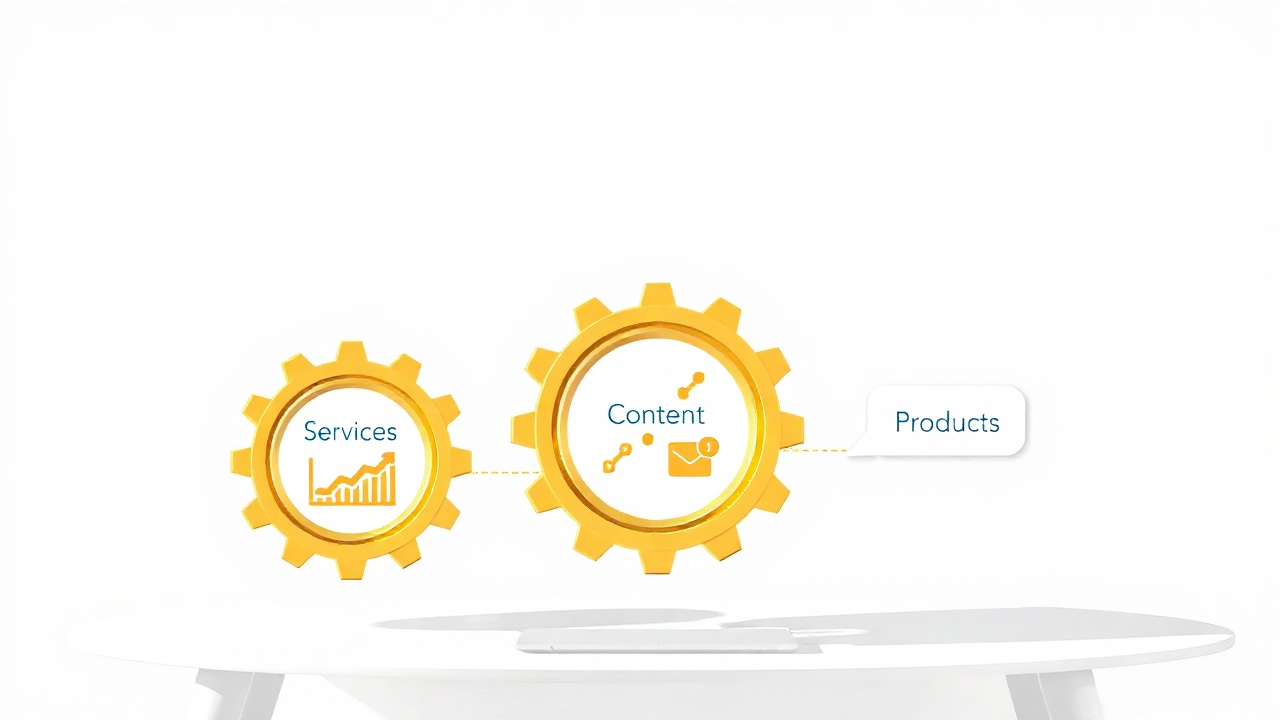
Every legitimate way to earn money using AI follows one of three models:
Model 1: Service arbitrage. You sell a deliverable to clients—articles, emails, ad copy, chatbot scripts, documentation—and use AI to produce it faster than manual creation allows. Your margin is the difference between what clients pay and your time/tool costs. This is AI freelancing in its purest form.
Model 2: Content monetization. You build websites, newsletters, or social channels that attract audiences, then monetize through advertising, affiliate commissions, or sponsored content. AI accelerates content production from the traditional 3-5 articles weekly to 20-50+, letting you scale traffic faster.
Model 3: Digital product creation. You package AI-assisted expertise into sellable assets—ebooks, courses, templates, prompt libraries, software tools—and sell them repeatedly. The AI helps you create the product and often the marketing materials around it.
Most successful operators combine two or three models. A freelancer might build a content site that demonstrates expertise, attracting higher-paying clients while generating passive ad revenue.
The critical insight: AI is a production multiplier, not a business model. You still need something to sell, someone to sell it to, and a way to reach them. ChatGPT makes production 5-10x faster, but it doesn't create demand, build relationships, or handle the business side.
Step-by-step: how to start
Here's the concrete playbook for each income path, with specific action items.
Path A: AI freelancing (fastest to first dollar)
Step 1: Choose your service specialization.
Avoid generic categories. Instead of "blog writing," consider "SaaS product documentation" or "Amazon listing optimization." Instead of "social media content," try "LinkedIn thought leadership for B2B executives."
Look for services where:
- Clients pay $200+ per deliverable
- The work requires research and expertise, not just words
- Competition from overseas generalists is limited
Step 2: Build your workflow and quality system.
Create a repeatable process: intake questionnaire → research phase → AI draft → human refinement → delivery format. Document every step. Your workflow is your competitive advantage.
Test your output quality by having target clients review samples anonymously. If they can't tell it's AI-assisted (or don't care because it's good), you're ready.
Step 3: Establish your presence.
Set up profiles on Upwork, Fiverr Pro, and LinkedIn. Create 3-5 portfolio samples in your specialization. Price at 70% of established competitors initially, then raise rates after 5-star reviews accumulate.
Step 4: Systematize client acquisition.
Send 10 personalized pitches daily on freelance platforms. Post 3x weekly on LinkedIn demonstrating your expertise. Follow up with every inquiry within 2 hours.
Path B: Content monetization (highest passive potential)
Step 1: Select a monetizable niche.
Ideal niches have: search volume (people actively looking for information), commercial intent (products or services to promote), and low-medium competition (sites ranking aren't massive authority domains).
Examples working in 2026: specific software comparisons, local service guides, hobby gear reviews, professional certification prep.
Step 2: Build your content infrastructure.
You need a website that loads fast, looks professional, and handles SEO basics automatically. This used to take weeks of WordPress configuration. Now, tools like Site Engine let you launch a review site or blog in under a minute—with hosting, theme, and SEO structure handled. Start here rather than fighting technical setup.
Step 3: Create content at scale with quality control.
Here's where most people fail: they either produce garbage at scale or quality content too slowly.
The solution is systematized production. Content Engine generates long-form, SEO-ready articles that actually rank—not the thin, repetitive output from basic ChatGPT prompts. You review, refine, and publish rather than writing from scratch.
Target 30-50 articles in your first month. This sounds aggressive, but with proper tools, it's 2-3 hours daily rather than a full-time job.
Step 4: Monetize traffic.
At 0-1,000 monthly visitors: focus purely on content. At 1,000-10,000: apply for Mediavine Journey or Ezoic. At 10,000+: negotiate direct affiliate relationships and sponsored content.
"The operators making real money with AI in 2026 aren't prompt wizards—they're business operators who happen to use AI. The tool is secondary to the strategy."
Path C: Digital products (highest margin potential)
Step 1: Identify a painful problem in your knowledge area.
Digital products sell when they solve specific problems faster than alternatives. "How to use ChatGPT" is too broad. "47 ChatGPT prompts for real estate agents to write listing descriptions" is specific and valuable.
Step 2: Create the core product.
Use AI to draft your ebook, course scripts, or template pack. Then heavily edit for accuracy, originality, and genuine usefulness. Products that feel AI-generated get refund requests and bad reviews.
If you need source material fast, PLR Engine provides 100,000+ done-for-you articles plus an AI rewriter to make them unique. This works especially well for research-heavy products where you're synthesizing existing information.
Step 3: Build your lead generation system.
Create a free lead magnet—a PDF checklist, mini-guide, or template—that attracts your ideal buyers. Lead Magnet Engine generates both the PDF and landing page instantly, skipping the design and tech work that usually delays launches by weeks.
Step 4: Launch and iterate.
Start with a minimal viable product at $17-$47. Collect feedback. Improve. Raise prices. A product earning $500/month at $27 can earn $1,500/month at $67 with modest improvements and better positioning.

Realistic earnings & timeline
Let's talk real numbers based on reported outcomes from operators using these methods:
| Income Path | Month 1-2 | Month 3-6 | Month 6-12 | Time Investment |
|---|---|---|---|---|
| AI Freelancing | $0-$500 | $1,000-$3,000 | $3,000-$8,000 | 15-25 hrs/week |
| Content Sites | $0 | $100-$500 | $500-$3,000 | 10-20 hrs/week |
| Digital Products | $0-$200 | $500-$2,000 | $2,000-$7,000 | 15-20 hrs/week |
| Combined Approach | $0-$500 | $1,500-$4,000 | $5,000-$15,000 | 25-35 hrs/week |
Important context:
- These ranges represent the 25th to 75th percentile of consistent operators. Outliers earn more; many who quit early earn nothing.
- Freelancing income is linear—you trade time for money, though rates can increase significantly.
- Content sites and products compound over time. Month 12 often exceeds months 1-6 combined.
- The combined approach works best but requires more initial investment and complexity management.
Mistakes that kill beginners
Mistake 1: Chasing every ChatGPT business idea simultaneously.
You see a YouTube video about AI newsletters, start that, then pivot to AI art, then to chatbot development. Each pivot resets your progress to zero. Pick one path and commit for 90 days minimum before evaluating.
Mistake 2: Publishing raw AI output without editing.
Google's algorithms have become remarkably good at detecting and demoting low-quality AI content. Readers have become even better. Every piece of content needs human judgment, editing, and fact-checking. The AI creates the first draft; you create the final product.
Mistake 3: Underpricing services because "AI makes it easy."
Your clients pay for the outcome, not your effort. A well-researched article that drives traffic is worth $300+ regardless of whether it took you 30 minutes or 3 hours to create. Price based on value delivered, not time spent.
Mistake 4: Ignoring the business fundamentals.
No amount of AI sophistication compensates for inability to find clients, market products, or manage cash flow. Spend 50% of your time on production and 50% on business development—especially in the first six months.
Mistake 5: Waiting for perfect tools or the "right" AI model.
GPT-5, Claude 4, Gemini Ultra—there's always something better coming. The operators earning money today started with imperfect tools and improved their systems over time. Launch now, optimize later.
Frequently asked questions
How much can you realistically make with ChatGPT?
Beginners typically earn $500-$2,000 monthly within 3-6 months. Experienced operators running content services or digital product businesses report $5,000-$15,000+ monthly, though results depend heavily on your niche, consistency, and business model.
Is AI freelancing still profitable in 2026?
Yes, but the market has matured. Generic prompt-based services face heavy competition. Profitable AI freelancers now specialize in specific industries (legal, medical, finance) or complex deliverables (sales funnels, technical documentation) where expertise compounds the AI output.
What skills do I need to make money with ChatGPT?
You need basic prompt engineering, understanding of your target market's needs, quality control abilities, and business fundamentals like client communication and marketing. Technical coding skills help but aren't required for most income paths.
Can I start an AI business with no money?
You can start freelancing with just a ChatGPT subscription ($20/month). However, scaling into content sites or digital products typically requires $50-$200 monthly for hosting, tools, and automation platforms to make meaningful income.
What's the fastest way to earn money using AI?
AI freelancing offers the fastest path to first income, often within 2-4 weeks. Content sites and digital products take longer to build but create more passive, scalable revenue over time. Most successful operators combine both approaches.
The bottom line
How to make money with ChatGPT in 2026 comes down to treating AI as a production tool within a real business—not a magic money printer. The winners are running systematized operations: clear niches, repeatable workflows, quality standards, and consistent execution. Pick your path, build your system, and start producing this week rather than planning for another month.
Get the AI tools to do all of this — free
Create a free Elite Engines account and get 5 AI money-making engines instantly. No credit card.