Quick Summary
You don't need to draw, paint, or even understand color theory to sell AI art in 2026. This guide shows you exactly how to make money with AI art by generating images with tools like Midjourney, turning them into physical prints and digital downloads, and listing them on marketplaces where real buyers are already shopping. We'll cover the actual steps, realistic income expectations, and the specific mistakes that sink most beginners before they make their first sale.
Can you really make money with this in 2026?
As of early 2026, the AI art market has matured significantly—and that's actually good news for newcomers. The gold rush chaos of 2023-2024 has settled into a legitimate creative economy where quality and niche selection matter more than being first.
The numbers tell a clear story. Etsy reported that digital art downloads grew 34% year-over-year in 2025, with AI-assisted artwork now representing an estimated 15-20% of the digital art category. Print-on-demand platforms like Redbubble and Society6 have seen similar growth in wall art sales, with abstract and minimalist categories—where AI excels—leading the charge.
Here's the honest truth: making your first $100 is very achievable within 60-90 days. Scaling to $1,000+ monthly requires treating this like a real business with consistent output, keyword optimization, and audience building. The sellers who fail are almost always those who upload 20 images, wait for magic, and quit after two weeks of silence.
The competitive advantage in 2026 isn't access to AI tools—everyone has that now. It's understanding what buyers actually want, creating cohesive collections that stand out, and optimizing your listings so the right people find them.
How AI art selling actually works
The business model is straightforward once you understand the three layers involved.
Layer 1: Generation. You use an AI image generator (Midjourney, DALL-E 3, Leonardo AI, or Stable Diffusion) to create original artwork. You write text prompts describing what you want, and the AI produces images. Better prompts equal better output, but this is a learnable skill—not an innate talent.
Layer 2: Product Creation. Raw AI images rarely sell as-is. You transform them into products: high-resolution prints sized for standard frames, digital download bundles, phone wallpaper packs, or print-on-demand items like canvas prints and posters. This step involves basic upscaling, formatting, and sometimes light editing.
Layer 3: Distribution. You list your products on marketplaces (Etsy, Creative Market, Gumroad) or print-on-demand platforms (Redbubble, Society6, Printful connected to Shopify). Buyers purchase, and depending on your model, you either deliver digital files automatically or the POD platform prints and ships physical products.
The money flows differently depending on your approach. Digital downloads have the highest margins (often 70-90% after platform fees) but require driving your own traffic over time. Print-on-demand has lower margins (typically 15-25%) but zero inventory risk and the platforms handle fulfillment. Most successful sellers use a hybrid approach.
Step-by-step: how to start
Step 1: Choose your niche before generating anything
This is where 80% of beginners go wrong. They create whatever looks cool to them, then wonder why nobody buys it.
Profitable AI art niches in 2026 include:
- Minimalist botanical prints — consistently strong sellers for home decor
- Abstract geometric wall art — appeals to modern interior design trends
- Celestial and cosmic themes — evergreen demand in the spiritual/wellness market
- Vintage-style travel posters — nostalgia sells, and AI handles this aesthetic well
- Pet portraits in artistic styles — customization commands premium prices
- Affirmation and quote backgrounds — massive digital download market
Research what's actually selling. Spend an hour on Etsy searching "digital wall art" and "printable art" in your interest areas. Look at shops with 1,000+ sales and study their bestsellers. Your goal is to find the intersection of proven demand and your ability to generate quality images in that style.
Step 2: Master one AI tool deeply
Don't bounce between five different generators. Pick one and learn it thoroughly.
For selling AI art prints, Midjourney v6 remains the industry standard because of its aesthetic consistency and high-resolution output. The $10/month Basic plan gives you enough generations to start.
Spend your first week just practicing prompts. Learn how modifiers like "8k resolution," "professional photography," "minimalist composition," and style references affect your output. Document what works. Your prompt library becomes a genuine business asset.
Step 3: Create cohesive collections, not random images
Buyers want sets that work together. A "Serene Japanese Garden" collection of 6-8 coordinating prints will outsell 8 unrelated images every time.
For each collection:
- Generate 20-30 images in the same style
- Curate the best 6-10 that share a color palette and mood
- Create multiple size variations (8x10, 11x14, 16x20, 24x36 for US standard frames)
- Consider bundle pricing for the full collection
Step 4: Prepare your files professionally
Buyers pay for convenience. Your digital downloads should include:
- Multiple sizes and aspect ratios
- High resolution (300 DPI minimum for prints)
- Clear file naming ("Botanical_Print_01_16x20_300dpi.jpg")
- A simple PDF with printing instructions
For print-on-demand, each platform has specific upload requirements. Prepare templates in advance so uploading becomes a quick process rather than a creative bottleneck.
Step 5: Build your Etsy presence strategically
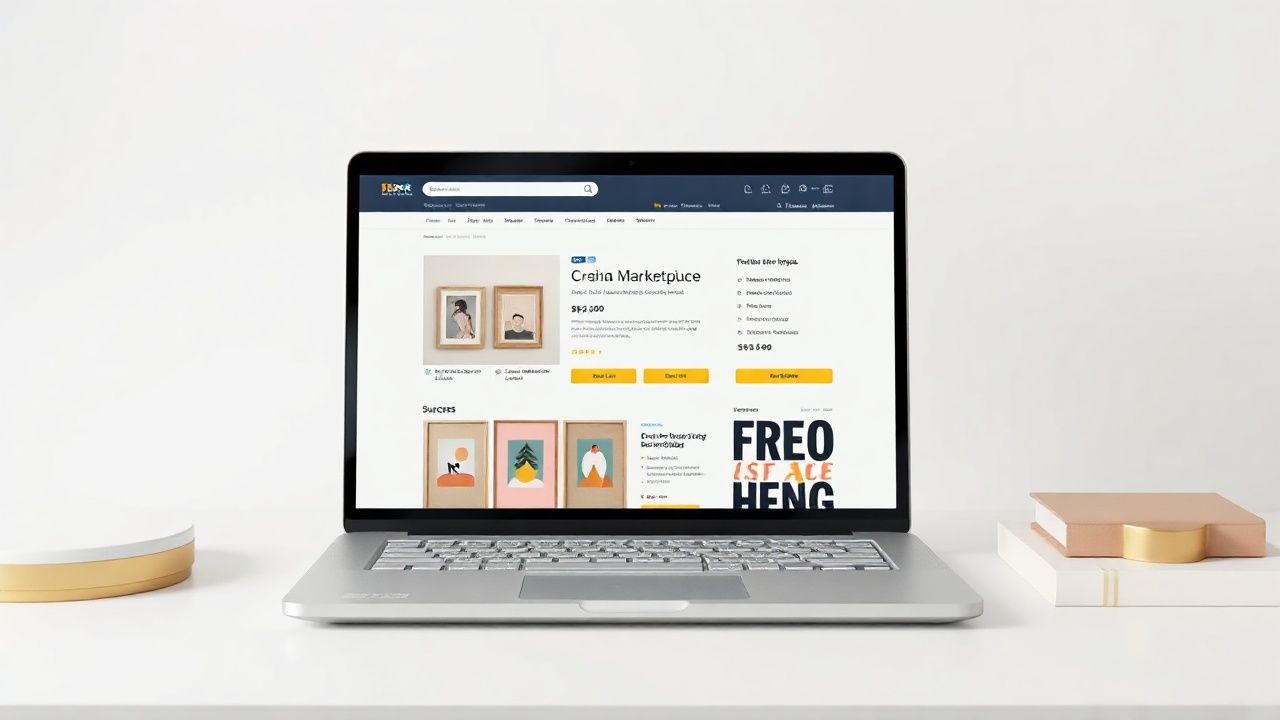
Etsy remains the most accessible marketplace to sell AI art because buyers are already there searching for exactly what you're creating.
Your listing optimization matters enormously. Etsy's search algorithm weighs titles, tags, and descriptions heavily. Research what keywords buyers actually use—not what sounds artistic to you.
The difference between a listing that gets 10 views and one that gets 1,000 often comes down to whether you wrote "blue abstract art" or "navy blue minimalist wall art living room decor modern print."
This is where most beginners hit a wall. Writing SEO-optimized listings for dozens of products is tedious and time-consuming. The Etsy Engine can dramatically accelerate this process by generating optimized titles, descriptions, and tag sets specifically structured for Etsy's search algorithm—turning hours of copywriting into minutes.
Step 6: Expand to multiple platforms
Once your Etsy shop has 30+ listings and you're seeing consistent traffic, expand to:
- Redbubble/Society6 — upload your existing images as print-on-demand products
- Creative Market — higher price points, design-savvy audience
- Gumroad — direct sales with minimal fees, great for building an email list
- Your own website — highest margins, full control, but requires driving your own traffic
Step 7: Build content that drives organic traffic
The sellers earning $3,000+ monthly aren't just waiting for marketplace search traffic. They're creating content that brings buyers directly to their shops.
Pinterest is the most effective channel for AI art sellers—it's essentially a visual search engine where your art can surface for years. YouTube tutorials showing your creation process build audience and authority. Blog content about interior design, home decor trends, or art selection guides can rank in Google and send qualified buyers your way.
If content creation feels overwhelming on top of product development, the Content Engine can help you produce SEO-optimized articles about topics like "how to choose wall art for a minimalist bedroom" that attract the exact people who'd buy your prints.
Realistic earnings & timeline
| Timeline | Expected Monthly Revenue | Effort Required | Key Milestones |
|---|---|---|---|
| Month 1-2 | $0-$50 | 10-15 hrs/week | 30+ listings live, first organic views |
| Month 3-4 | $50-$200 | 8-12 hrs/week | First reviews, 50+ listings, identifying bestsellers |
| Month 5-6 | $200-$500 | 8-10 hrs/week | 100+ listings, expanding to second platform |
| Month 7-12 | $500-$1,500 | 6-10 hrs/week | Multiple platforms, Pinterest traffic growing |
| Year 2 | $1,500-$3,000+ | 5-8 hrs/week | Established brand, repeat customers, passive income growing |
These numbers assume consistent weekly effort and continuous optimization based on what's selling. The sellers who plateau at $200/month are typically those who stop adding new products and don't analyze their data.
The midjourney money is real, but it's not instant. Treat the first 90 days as building infrastructure. The sales accelerate once you have enough listings to capture search traffic across multiple buyer queries.
Mistakes that kill beginners
Ignoring marketplace SEO. Your art could be stunning, but if your listing title is "Beautiful Sunset Print" instead of "Orange Sunset Wall Art Digital Download Printable Coastal Beach House Decor," buyers will never find it. Keywords aren't optional.
Creating one-offs instead of collections. Random single images get lost. Cohesive collections of 6-12 related prints signal professionalism and increase average order value when buyers purchase multiple pieces.
Underpricing to compete. Racing to the bottom kills your business before it starts. A $2.99 digital download positions you as disposable. A $12.99 collection of 8 prints with clear value proposition attracts buyers who appreciate quality and leave better reviews.
Neglecting print quality requirements. AI art on etsy fails when buyers print their download and it looks pixelated or blurry. Always upscale to at least 300 DPI at the largest print size you're offering. Test print your own work before selling.
Giving up before the algorithm kicks in. Marketplaces favor shops with history, reviews, and consistent activity. Your first 10 sales are the hardest. Most successful shops report a clear inflection point around 50-100 sales where visibility suddenly improves. Quitting at week three means you never reach that threshold.
Frequently asked questions
Can you legally sell AI-generated art?
Yes, in most jurisdictions you can sell AI art you create using tools like Midjourney or DALL-E 3. However, copyright ownership varies by platform and country. Most platforms grant commercial licenses for paid tiers. Always check the specific terms of service for your AI tool and marketplace.
How much can you realistically make selling AI art?
Beginners typically earn $100-$500 per month in their first 6 months. Consistent sellers with optimized listings often reach $1,000-$3,000 monthly within a year. Top performers selling AI art prints and digital downloads can exceed $5,000 monthly, though this requires significant catalog building and marketing effort.
What is the best platform to sell AI art in 2026?
Etsy remains the top marketplace for AI art prints and digital downloads due to its built-in buyer traffic. Redbubble and Society6 work well for print-on-demand products. For higher margins, Gumroad and your own Shopify store let you sell directly to customers without marketplace fees.
Do I need to disclose that my art is AI-generated?
Platform policies vary. Etsy requires disclosure for AI-generated content as of their 2024 policy update. Amazon Merch and some other platforms have similar requirements. Even where not required, transparency builds customer trust. Many successful sellers market their work as "AI-assisted digital art" without hurting sales.
What AI art tool is best for making sellable prints?
Midjourney v6 produces the most consistently print-ready results with excellent composition and detail. DALL-E 3 excels at following specific prompts accurately. Leonardo AI offers good free-tier options for beginners. For print products, you need tools that output at least 2048x2048 pixels, which all major paid AI art platforms now support.
The bottom line
Learning how to make money with AI art isn't about artistic talent—it's about understanding what buyers want, creating products that meet that demand, and optimizing your presence so the right people find you. The tools have democratized creation; your edge comes from consistency, niche selection, and treating this like the real business it can become.
Get the AI tools to do all of this — free
Create a free Elite Engines account and get 5 AI money-making engines instantly. No credit card.