Quick Summary
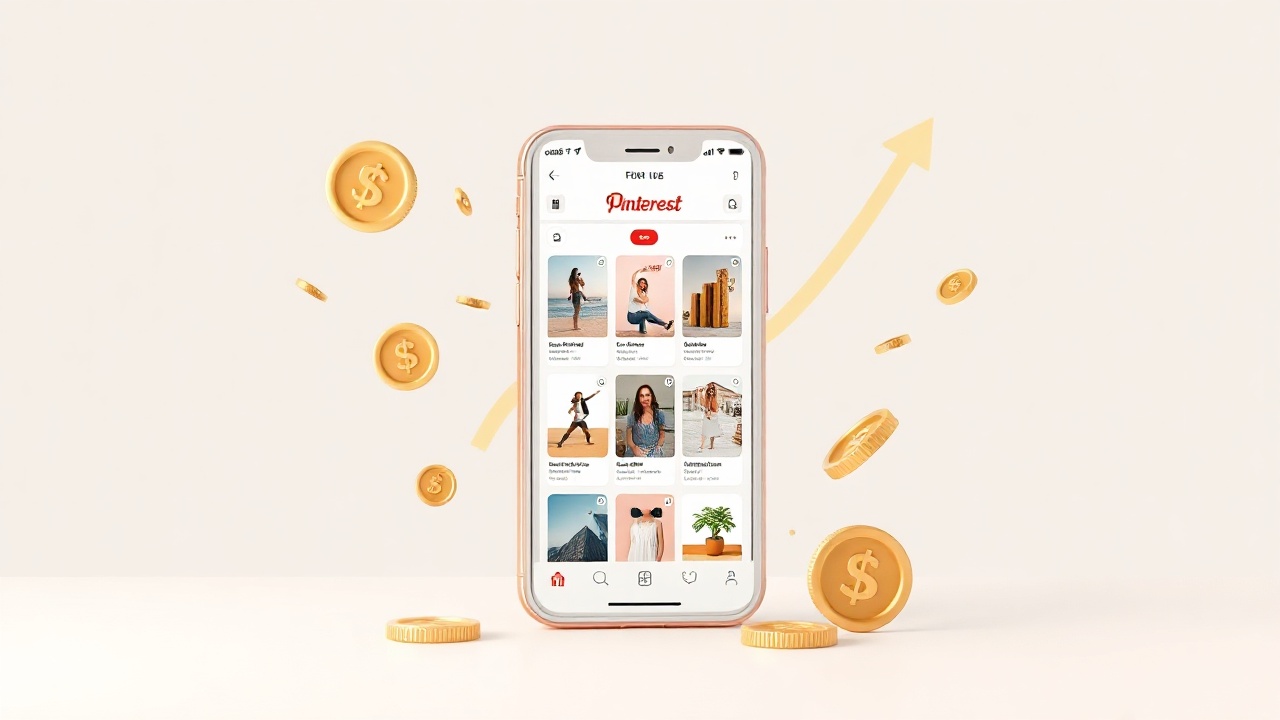
Pinterest remains one of the most underrated free traffic sources heading into 2026. Unlike Instagram or TikTok, Pinterest functions as a visual search engine—meaning your pins can drive clicks for years, not hours. This guide walks you through exactly how to make money on Pinterest using affiliate marketing, blog traffic, and digital products. You'll learn the step-by-step process, realistic earnings timelines, and how AI tools now make scaling your pin strategy dramatically faster.
Can you really make money with this in 2026?
As of early 2026, Pinterest has over 480 million monthly active users, with 85% of weekly pinners making purchase decisions directly from content they discover on the platform. That's not vanity metrics—that's buying intent baked into the user base.
Here's what makes Pinterest traffic different from other platforms: users arrive with wallets mentally open. Someone searching "best standing desks for home office" on Pinterest isn't casually scrolling—they're actively researching a purchase. This intent-driven behavior translates directly into affiliate commissions and product sales.
The numbers back this up. Pinterest's internal data shows that pinners spend 80% more than non-pinners, and the platform drives 33% more referral traffic to shopping sites than Facebook. For online entrepreneurs, this means higher conversion rates on the same traffic volume you'd get elsewhere.
But here's the honest truth: Pinterest rewards consistency and patience. You won't see significant income in your first 30 days. The platform's algorithm needs time to understand your content, and your pins need time to get indexed and distributed. Most successful Pinterest marketers report hitting meaningful income ($500+/month) around the 4-6 month mark with daily effort.
How making money on Pinterest actually works
Pinterest operates as a visual search engine, not a social network. This distinction matters because it changes your entire strategy. You're not chasing viral moments—you're building a searchable library of content that compounds over time.
The mechanics work like this:
- You create pins (vertical images with text overlays) optimized for keywords people actually search
- Pinterest indexes your pins and shows them in search results and home feeds
- Users click through to your website, landing page, or affiliate link
- You monetize that traffic through affiliate commissions, ad revenue, product sales, or email list building
The three primary monetization paths for Pinterest traffic are:
Pinterest affiliate marketing: You create pins linking to product reviews or directly to affiliate offers. When someone clicks and purchases, you earn a commission. This works especially well in niches like home decor, fashion, fitness equipment, and digital tools.
Pinterest for bloggers: You use pins to drive traffic to your blog posts, then monetize through display ads (Mediavine, AdThrive), affiliate links within content, or sponsored posts. A blog with 50,000 monthly sessions from Pinterest can generate $1,500-4,000/month in ad revenue alone.
Digital product sales: You create pins promoting your own ebooks, courses, templates, or printables. Since you keep 100% of the sale (minus platform fees), this typically offers the highest profit margins.
Step-by-step: how to start
Step 1: Set up a Pinterest business account
Convert your personal account or create a fresh Pinterest business account. Business accounts give you access to analytics, rich pins, and the ability to run ads later. Go to business.pinterest.com and follow the setup wizard.
Claim your website during setup—this verifies you own the domain and gives your pins more authority in search results. If you don't have a website yet, you can use Site Engine to build a simple review blog or affiliate site in about 60 seconds. You need somewhere to send traffic, and a basic site converts better than sending clicks directly to affiliate links.
Step 2: Choose a profitable niche
Not all niches perform equally on Pinterest. The platform skews toward visual, aspirational, and practical content. High-performing niches in 2026 include:
- Home organization and decor
- Personal finance and budgeting
- Health, fitness, and meal planning
- DIY and crafts
- Fashion and beauty
- Parenting and family
- Travel planning
- Online business and side hustles
Pick a niche where you can create content consistently and where products exist to recommend. Pinterest traffic 2026 rewards specificity—"minimalist apartment organization" outperforms generic "home decor."
Step 3: Keyword research for Pinterest SEO
Open Pinterest and start typing phrases related to your niche. The autocomplete suggestions show you exactly what people search for. Document these keywords—they'll guide your pin titles, descriptions, and board names.
For example, typing "home office" might reveal:
- home office setup ideas
- home office organization
- home office decor small space
- home office desk setup
Each of these becomes a potential pin topic. Create a spreadsheet tracking keywords, search volume indicators (how many autocomplete suggestions appear), and content ideas for each.
Step 4: Create boards strategically
Build 8-12 boards focused on specific subtopics within your niche. Each board should target a keyword cluster. Use keyword-rich board names and descriptions.
Example board structure for a home office niche:
- Small Space Home Office Ideas
- Standing Desk Setups
- Home Office Organization Hacks
- Work From Home Productivity Tips
- Budget Home Office Makeovers
The biggest mistake beginners make is creating generic boards like "Stuff I Like" or "Random Ideas." Pinterest's algorithm can't categorize vague boards, so your pins get buried.
Step 5: Design click-worthy pins at scale
This is where most people get stuck. Creating high-quality pins consistently is time-intensive—unless you systematize it.
Each pin needs:
- A vertical format (2:3 ratio, ideally 1000x1500 pixels)
- Clear, readable text overlay
- Compelling imagery that stops the scroll
- Brand consistency (colors, fonts) so your pins become recognizable
For the visual design, tools like Thumbnail Engine can generate scroll-stopping graphics quickly. While it's built for YouTube thumbnails, the visual principles—contrast, clear text hierarchy, emotional imagery—translate directly to Pinterest pins. You can adapt the outputs or use them as design inspiration for your pin templates.
Step 6: Write SEO-optimized pin descriptions
Every pin needs a description (up to 500 characters) packed with natural keywords. Your description should:
- Include your primary keyword in the first line
- Add 2-3 related keywords naturally
- Include a clear call-to-action ("Click to read the full guide")
- Sound human, not stuffed with keywords
Example: "Looking for small space home office ideas? This guide covers 15 compact desk setups perfect for apartments and tiny rooms. Click to see the full list and find the perfect workspace solution for your home."
Step 7: Create destination content
Your pins need somewhere valuable to send people. This is where you actually make money pinning.
For affiliate marketing, create comparison posts ("Best Standing Desks Under $500"), product reviews, or roundup articles that naturally include affiliate links. For bloggers, write in-depth guides that rank for long-tail keywords and monetize through display ads.
If writing long-form content sounds overwhelming, Content Engine produces SEO-ready articles that you can customize and publish. Pair each article with 5-10 different pins to maximize traffic potential from a single piece of content.

Step 8: Build an email list from Pinterest traffic
Smart Pinterest marketers don't just monetize one-time visits—they capture emails for ongoing revenue. Create a simple lead magnet related to your niche (checklist, template, mini-guide) and offer it on your site.
The Lead Magnet Engine can generate both the PDF lead magnet and landing page instantly. A "Small Space Home Office Checklist" or "30-Day Productivity Planner" gives visitors a reason to subscribe. Once on your list, you can promote affiliate offers and products repeatedly.
Step 9: Pin consistently with a schedule
Aim for 5-15 fresh pins daily. Use Pinterest's native scheduler or tools like Tailwind to batch your pinning. Consistency matters more than volume—pinning 10 pins daily for 6 months beats pinning 50 daily for 2 weeks then disappearing.
Fresh pins mean new images, not just re-pins of existing content. Create multiple pin designs for each piece of content to maximize reach.
Step 10: Analyze and double down on winners
After 30-60 days, check Pinterest Analytics to see which pins drive the most clicks. Look for patterns—certain colors, headlines, topics, or formats that outperform. Create more variations of your winning pins and replicate what works.
Realistic earnings & timeline
| Timeline | Expected Results | Estimated Monthly Earnings |
|---|---|---|
| Month 1-2 | Building foundation, minimal traffic | $0-50 |
| Month 3-4 | Traffic starts compounding, first affiliate sales | $50-200 |
| Month 5-6 | Consistent daily traffic, multiple income streams | $200-800 |
| Month 7-12 | Established account, pins ranking well | $500-2,000 |
| Year 2+ | Authority account, viral pins, scaled systems | $2,000-10,000+ |
These numbers assume daily pinning of 5-15 quality pins, a monetized blog or affiliate strategy, and a profitable niche. Your results will vary based on niche competition, content quality, and monetization efficiency.
Mistakes that kill beginners
Using horizontal images: Pinterest is a vertical platform. Horizontal pins get buried because they take up less screen space. Always use 2:3 ratio vertical pins (1000x1500 pixels minimum).
Ignoring Pinterest SEO: Treating Pinterest like Instagram—focusing on hashtags and engagement rather than keywords and search optimization—limits your reach dramatically. Pinterest is search-first. Optimize titles, descriptions, and boards for keywords.
Inconsistent pinning: Posting 30 pins one day then disappearing for two weeks signals to Pinterest that you're not a reliable content source. The algorithm rewards consistency. Even 5 pins daily beats sporadic bursts of activity.
Sending traffic to thin content: Pins that lead to a single affiliate link with no value convert poorly. Users want information. Send them to helpful content that naturally includes monetization, not blatant sales pages.
Copying other pins: Pinterest's algorithm detects and suppresses duplicate images. Creating original pin designs—even if they cover the same topic—performs dramatically better than saving or copying existing pins.
Frequently asked questions
How much money can you realistically make on Pinterest?
Most beginners earn $100-500 per month within 6-12 months of consistent pinning. Experienced Pinterest marketers with established accounts and multiple income streams typically earn $2,000-10,000+ monthly. Your earnings depend on niche selection, pin volume, and monetization strategy.
Do you need a blog to make money on Pinterest?
No, you don't need a blog. You can earn through direct affiliate links (where allowed), digital product sales, or driving traffic to landing pages. However, having a blog or website typically increases earnings by 3-5x because you control the user journey and can monetize through multiple channels.
Is Pinterest affiliate marketing allowed in 2026?
Yes, Pinterest allows affiliate marketing but with rules. You must disclose affiliate relationships, avoid link cloaking, and only use approved affiliate programs. Amazon Associates, ShareASale, and Impact are all Pinterest-compliant. Direct affiliate pins work, but sending traffic to a review article typically converts better.
How many pins should you post per day to grow?
In 2026, quality beats quantity. Aim for 5-15 fresh pins daily rather than the 25-50 that worked in earlier years. Pinterest's algorithm now prioritizes engagement and saves over raw volume. Focus on creating original, valuable pins rather than repinning existing content.
How long does it take to get traffic from Pinterest?
New accounts typically see meaningful traffic within 2-4 months of consistent daily pinning. Pinterest traffic compounds over time—pins can drive clicks for 2-3 years, unlike social media posts that die within hours. Most successful Pinterest marketers report their best results after 6-12 months of building momentum.
The bottom line
Learning how to make money on Pinterest isn't complicated—it's a straightforward process of creating searchable visual content and sending that traffic to monetized destinations. The platform rewards patience and consistency over hacks and shortcuts. Start pinning today, stay consistent for six months, and you'll have a traffic asset that compounds while you sleep.
Get the AI tools to do all of this — free
Create a free Elite Engines account and get 5 AI money-making engines instantly. No credit card.