Quick Summary: Blogging still pays in 2026, but the game has changed. You need AI-assisted content production, at least two monetization methods, and 12-18 months of patience. The six money-makers are display ads, affiliate marketing, sponsored posts, digital products, services, and memberships. One person with the right tools can now publish what took a five-person team in 2020.
Can You Really Make Money With This in 2026?
As of early 2026, blogging generates over $500 million annually for independent creators in the United States alone. But here's what's changed: the barrier to entry has dropped, which means competition has intensified. Google's helpful content updates and AI overviews have reshuffled the deck, rewarding genuine expertise over keyword-stuffed content farms.
The honest answer is yes—you can absolutely make money blogging in 2026. But you won't get rich in 90 days, despite what some YouTube gurus claim. The median time to first $1,000 month is 14 months. The median time to replacing a full-time income is closer to 30 months.
What's genuinely exciting is this: AI tools have collapsed the production cost of running a blog. Tasks that required hiring writers, editors, and designers can now be handled by one person publishing 15-30 quality posts per month. That's the real opportunity—not that blogging is suddenly easier, but that the economics finally favor solo operators.
How Blog Monetization Actually Works
Blogs make money by converting attention into revenue. You attract visitors through search engines, social media, or referrals. Then you monetize that attention through one or more of these six channels:
1. Display Advertising
Ad networks like Mediavine, Raptive, or Google AdSense place ads on your site and pay you per thousand impressions (CPM) or per click (CPC). Finance blogs earn $20-50 CPM. Lifestyle blogs earn $8-15 CPM. You typically need 10,000-50,000 monthly sessions to join premium networks.
2. Affiliate Marketing
You recommend products and earn commissions when readers purchase through your links. Amazon Associates pays 1-10%. Software affiliates pay 20-50% recurring. High-ticket affiliates (courses, coaching, financial products) pay $50-500+ per sale.
3. Sponsored Content
Brands pay you to write about their products or mention them in your content. Rates range from $100 for small blogs to $5,000+ for established sites with engaged audiences.
4. Digital Products
Ebooks, templates, courses, printables, and software you create once and sell repeatedly. Margins are 70-95% after payment processing. This is where the real wealth-building happens.
5. Services
Consulting, coaching, freelancing, or done-for-you work in your niche. Your blog becomes a lead generation machine. Service income often starts faster than passive income.
6. Memberships and Subscriptions
Recurring revenue from premium content, community access, or exclusive resources. Harder to build but creates predictable monthly income.
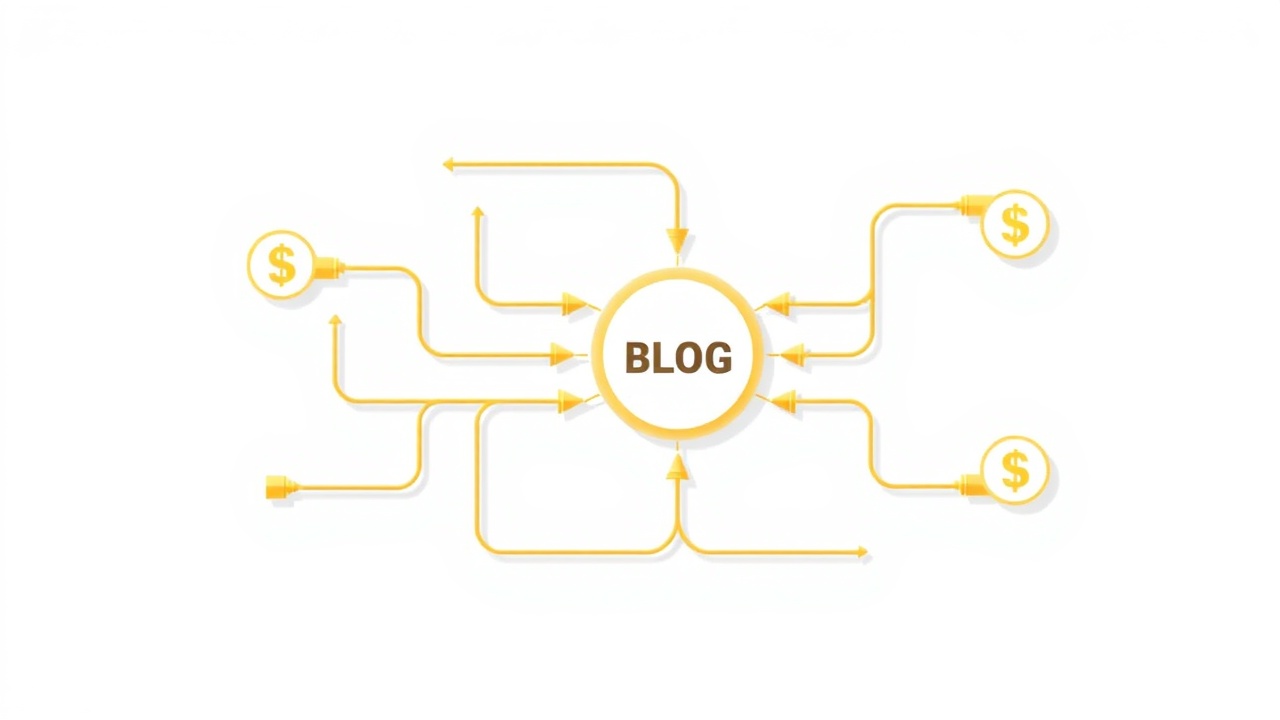
Most successful bloggers combine 2-4 of these methods. A typical profitable blog might earn 40% from display ads, 35% from affiliates, and 25% from a single digital product.
Step-by-Step: How to Start a Blog and Make Money
Step 1: Choose a Profitable Niche (Week 1)
The best blog niches for money share three characteristics: high search volume, commercial intent, and topics you can write about for years without burning out.
Analyze these factors:
- Advertiser demand: Do companies spend money targeting this audience?
- Affiliate potential: Are there products paying 20%+ commissions?
- Content depth: Can you write 200+ posts without repeating yourself?
- Your advantage: Do you have credentials, experience, or passion competitors lack?
Avoid niches that sound profitable but are actually brutal for beginners: pure product reviews (dominated by big publishers), breaking news (requires constant publishing), or anything requiring medical/legal credentials you don't have.
Step 2: Set Up Your Blog Properly (Week 1-2)
You need hosting, a domain, WordPress (or equivalent), and a clean theme. This used to take days of technical fumbling. Now you can use Site Engine to spin up a review or blog site in about 60 seconds, complete with proper structure, essential pages, and monetization-ready layouts.
Key setup requirements:
- Fast hosting (under 2-second load times)
- SSL certificate (the padlock in the browser)
- Mobile-responsive design
- Essential pages: About, Contact, Privacy Policy, Affiliate Disclosure
- Google Analytics and Search Console connected
Step 3: Build Your Content Foundation (Month 1-3)
Before chasing traffic, you need content worth visiting. Aim for 30-50 foundational posts covering your niche's core topics. These should be comprehensive, genuinely helpful, and better than what's currently ranking.
"The bloggers who fail publish 10 mediocre posts and wait. The bloggers who succeed publish 50 quality posts and keep going."
Content types that drive traffic and revenue:
- Informational posts: "How to," "What is," and "Why" articles that answer questions
- Comparison posts: "X vs Y" articles with affiliate links to both
- Best-of lists: "Best [products] for [use case]" with affiliate links
- Tutorials: Step-by-step guides that build trust and email subscribers
This is where AI dramatically changes the economics. One person writing manually might produce 8-10 quality posts per month. Using Content Engine for long-form, SEO-ready drafts, you can produce 20-30—then spend your time adding personal insights, examples, and the expertise that makes content rank.
Step 4: Build an Email List From Day One (Month 1+)
Your email list is the only traffic source you truly own. Search algorithms change. Social platforms die. But your subscribers stick around.
Create a simple lead magnet—a checklist, template, or mini-guide—and offer it in exchange for email addresses. Place opt-in forms on your highest-traffic posts, your homepage, and your about page.
Email consistently, even if it's just weekly. Mix value-driven content with product recommendations and affiliate offers. For writing and sending sequences at scale, Email Engine handles both creation and broadcasting, turning email from a chore into a revenue channel.
Step 5: Apply for Monetization (Month 3-6)
Once you have 20+ posts and some traffic trickling in:
- Google AdSense: Apply immediately (low barrier, low pay)
- Amazon Associates: Apply when you have product-related content
- Niche affiliate programs: Research brands in your space and apply directly
- Premium ad networks: Apply when you hit 10,000+ monthly sessions
Don't wait until you're "ready." Apply early, get rejected, learn why, and reapply.

Step 6: Scale What Works (Month 6+)
After six months, you'll have data. Some posts will drive 80% of your traffic. Some affiliates will drive 80% of your revenue. Double down on what's working.
Scaling strategies:
- Write more content in your top-performing topic clusters
- Promote your highest-converting affiliate products more prominently
- Build digital products around your most popular content
- Expand email sequences that generate sales
This is also when to systematize content production. If you're consistently publishing, consider using PLR Engine for research starting points and supplementary content. Its 100,000+ article library and AI rewriter can accelerate supporting posts while you focus on flagship content.
Realistic Earnings & Timeline
Here's what how to make money blogging actually looks like over time:
| Timeline | Monthly Traffic | Expected Monthly Income | Primary Revenue Sources |
|---|---|---|---|
| Month 1-3 | 0-500 visits | $0 | None (building foundation) |
| Month 4-6 | 500-2,000 visits | $0-100 | AdSense, first affiliate sales |
| Month 7-12 | 2,000-10,000 visits | $100-500 | Ads, affiliates, maybe one service client |
| Year 2 | 10,000-50,000 visits | $500-3,000 | Premium ads, affiliates, small digital product |
| Year 3+ | 50,000-200,000 visits | $3,000-15,000+ | Diversified: ads, affiliates, products, maybe sponsorships |
How much do bloggers make at scale? Top performers in lucrative niches clear $30,000-100,000+ monthly. But these are outliers with 3-7 years of consistent effort. The realistic goal for a dedicated solo blogger is $5,000-10,000/month within 2-3 years.
Mistakes That Kill Beginners
1. Niche Hopping After 3 Months
You won't see significant results before month 6-9 minimum. Switching niches restarts your clock. Pick something sustainable and commit for 18 months before evaluating.
2. Chasing Traffic Without Monetization Strategy
Some content attracts visitors who never buy anything. Viral Pinterest traffic to recipe posts earns almost nothing. Build content around commercial intent from the start.
3. Ignoring Email Until "Later"
Every month you delay list building is lost subscriber potential. Start collecting emails before you feel ready. Your list will be worth more than your blog itself.
4. Publishing Thin Content to Hit Arbitrary Goals
50 mediocre posts rank worse than 20 comprehensive ones. Google's 2025-2026 updates specifically penalize low-value content. Quality compounds; quantity without quality doesn't.
5. Treating AI as a Replacement Instead of a Tool
AI-generated content without human expertise, editing, and insight gets filtered out by increasingly sophisticated algorithms. Use AI to accelerate production and handle research—but your voice, experience, and unique angles are what build audience trust and search rankings.
Frequently Asked Questions
How much do bloggers make in 2026?
Blogger income varies dramatically. Beginners typically earn $0-500/month in year one. Intermediate bloggers with 25,000+ monthly visitors often earn $1,000-5,000/month. Established bloggers with strong SEO and multiple revenue streams can earn $10,000-50,000+ monthly. The median full-time blogger earns around $45,000-65,000 annually.
What are the best blog niches for money in 2026?
The most profitable blog niches in 2026 include personal finance, health and wellness, technology and AI tools, home improvement, travel, and B2B software. These niches combine high search volume with strong affiliate commissions or ad rates. Finance and insurance blogs can earn $20-50+ per thousand ad impressions.
How long does it take to make money blogging?
Most bloggers see their first income within 6-12 months of consistent publishing. Reaching $1,000/month typically takes 12-18 months. Full-time income ($4,000+/month) usually requires 2-3 years of focused effort. AI tools can compress these timelines by 30-50% by accelerating content production.
Is blogging still profitable in 2026?
Yes, blogging remains profitable in 2026. While competition has increased, so have monetization options. AI tools have reduced production costs significantly, improving margins. Blogs with genuine expertise and quality content continue to rank well and earn substantial income from ads, affiliates, and digital products.
Can you start a blog with no money?
You can start a blog for under $100/year using affordable hosting and free themes. However, investing $200-500 upfront in quality hosting, a premium theme, and basic tools typically accelerates growth. The real investment is time—expect to spend 10-20 hours weekly for the first year to build momentum.
The Bottom Line
Blog monetization in 2026 is slower than the gurus promise but more achievable than skeptics claim. The formula hasn't changed: pick a niche, publish consistently, build an email list, monetize through multiple channels, and keep going after most people quit. What's changed is that AI tools now let one committed person publish at the volume and quality that used to require a team—turning a side project into a legitimate business.
Get the AI tools to do all of this — free
Create a free Elite Engines account and get 5 AI money-making engines instantly. No credit card.