
Quick Summary
Finding a profitable niche isn't about chasing trends or copying competitors — it's about systematically identifying where real demand, monetization potential, and achievable competition overlap. This guide walks you through a repeatable 7-step framework used by successful niche site builders in 2026. You'll learn exactly how to validate your niche idea before investing months of effort, plus how AI tools can compress weeks of research into hours.
Can you really make money with this in 2026?
As of early 2026, niche websites and focused online businesses remain one of the most accessible paths to sustainable income for beginners. The landscape has shifted — AI-generated content floods search results, making quality and specificity more valuable than ever — but the fundamentals hold.
Here's what the data shows: niche sites in the right markets still generate $500 to $50,000+ monthly through affiliate commissions, display advertising, digital products, and sponsored content. The difference between sites that earn and sites that die comes down almost entirely to how to find a profitable niche in the first place.
The opportunity in 2026 isn't smaller. It's different. Google's AI Overviews, ChatGPT citations, and Perplexity references now drive significant traffic alongside traditional search. This actually helps focused niche creators who provide genuinely useful information, because AI systems prioritize authoritative, specific content over generic articles.
So yes — you can absolutely build a profitable niche business this year. But only if you choose your market deliberately rather than randomly.
How niche selection actually works
Think of niche research as solving a three-variable equation. You need:
- Demand — People actively searching for solutions, information, or products in this space
- Money — Those people willing and able to spend (directly or through ad views)
- Accessibility — Competition low enough that you can realistically rank and get traffic
Most beginners fail because they optimize for only one variable. They pick something they're passionate about (ignoring demand), chase a "hot" market (ignoring competition), or target high-ticket affiliate products (ignoring whether anyone actually searches for them).
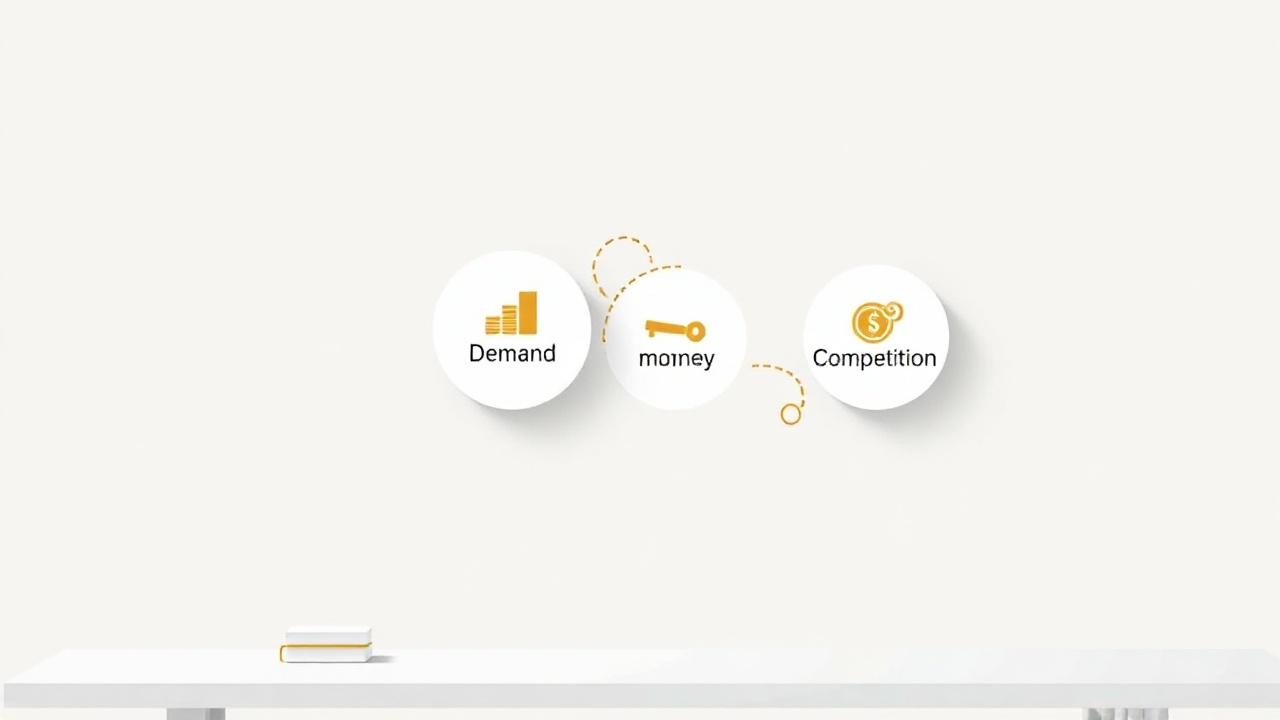
The framework below forces you to validate all three before committing. It's designed to take a weekend of focused work, not months of agonizing.
How to choose a niche effectively means treating it like a business decision rather than an identity choice. You're not marrying this topic. You're testing whether it can support a business.
Step-by-step: how to start
Step 1: Generate 20+ niche candidates in one sitting
Don't filter yet. Quantity matters here because your best idea probably isn't your first.
Use these prompts to brainstorm:
- Problems you've personally solved in the last 2 years
- Hobbies you've spent money on
- Professional skills from current or past jobs
- Topics you find yourself researching at 11pm
- Complaints you see repeatedly in Reddit communities
- Products you've bought that required research before purchasing
Write down everything. "Home gym equipment for small apartments," "meal prep for autoimmune conditions," "productivity apps for ADHD freelancers" — all fair game.
Aim for at least 20 candidates. Most will get eliminated, which is the point.
Step 2: Run the demand check
For each candidate, you need proof that people actually search for related topics.
Open Google Keyword Planner (free with a Google Ads account), Ubersuggest, or Ahrefs' free keyword tool. Search your niche topic and look for:
- Core keywords with 1,000+ monthly searches — This confirms baseline interest
- Long-tail variations — "best [product] for [specific use case]" indicates buyer intent
- Question-based searches — "how to," "why does," "what is" show information demand
Eliminate any niche where you can't find at least 10-15 keywords with meaningful search volume. No demand, no business.
Step 3: Validate the money
Demand alone doesn't pay bills. You need to confirm people spend in this niche.
Check these signals:
- Amazon affiliate potential — Search your niche on Amazon. Are there products priced $50+? Multiple brands competing? Regular new releases?
- Existing affiliate programs — Google "[niche] affiliate program." If companies pay 20-50% commissions, there's money.
- Display ad rates — Use a tool like AdThrive's niche list or search for RPM benchmarks. Finance, health, and B2B niches pay $20-50+ per 1,000 views. Lifestyle and entertainment often pay $5-15.
- Digital product precedent — Check Gumroad, Teachable, or Udemy. Are people successfully selling courses, templates, or tools in this space?
The best niches for 2026 typically have multiple monetization paths. Relying solely on Amazon commissions or display ads leaves you vulnerable.
Step 4: Assess realistic competition
This is where most beginners make critical errors. They either get scared by any competition (bad — competition confirms money) or ignore that they're entering a space dominated by giants (also bad).
For your top 5 remaining niches, do this:
- Search 3-5 specific keywords in Google
- Look at who ranks on page one
- Check their Domain Authority using Moz's free tool or Ahrefs
You want to see at least 2-3 sites with DA under 40 ranking on the first page. Bonus if you spot sites with DA under 30 in positions 1-5 — that's your opening.
If every result is WebMD, Forbes, Amazon, or established authorities with DA 70+, that keyword angle is likely too competitive. But don't abandon the niche entirely — look for sub-niches or longer-tail angles.
"Home fitness equipment" might be dominated by major players. "Home gym equipment for garage gyms under 200 sq ft" might have clear gaps.

Step 5: Confirm content depth potential
A profitable niche needs enough topics to build authority. If you can only write 15 articles before exhausting the subject, you'll hit a ceiling fast.
Test this by brainstorming article ideas. Can you quickly list 50+ potential topics? Consider:
- Product reviews and comparisons
- How-to tutorials
- Beginner guides
- Common mistakes
- Tools and resources
- Case studies
- Frequently asked questions
If you're struggling to reach 30 ideas, the niche may be too narrow. If you easily hit 100+, you've likely found something with staying power.
"The best niche isn't the one with the least competition. It's the one where you can consistently publish better content than what currently exists."
Step 6: Validate with real content (the AI shortcut)
Here's where 2026 differs from 2020. You no longer need to spend weeks writing test content manually to see if your niche thesis holds.
Create 3-5 articles targeting different keywords in your chosen niche. Watch how they perform over 30-60 days. This tells you:
- Whether your keyword research translates to actual traffic
- How engaged visitors are (time on page, bounce rate)
- If affiliate links or ads generate any revenue
For beginners who want to test multiple niches quickly, Content Engine can generate SEO-ready long-form articles that would otherwise take hours each. This lets you validate faster without burning out before you've even confirmed your direction.
If you're testing 2-3 niche candidates simultaneously, you might publish 10-15 articles across them in a week. Manually, that's a month of full-time writing. With AI assistance, it's a weekend.
Step 7: Build your validation site
You don't need a perfect website to test a niche. You need a functional one.
Many beginners spend weeks choosing themes, customizing colors, and perfecting logos — then never publish content. Reverse this. Get a basic site live, publish your test content, and improve aesthetics later based on what actually works.
Site Engine builds functional blog and review sites in about 60 seconds, which eliminates the "website paralysis" that kills most niche projects before they start. Your validation phase should be about testing content and market response, not debugging WordPress.
Realistic earnings & timeline
Niche research alone doesn't make money. Execution does. But choosing the right niche dramatically changes your earnings trajectory.
| Timeline | Realistic Milestone | Monthly Earnings Range |
|---|---|---|
| Month 1-2 | Niche selected, site live, 10-20 articles published | $0-50 |
| Month 3-4 | 30-50 articles, first organic traffic appearing | $50-200 |
| Month 6 | 50-80 articles, consistent traffic growth | $200-800 |
| Month 12 | 100+ articles, established authority | $500-3,000 |
| Month 18-24 | Mature site with multiple revenue streams | $2,000-10,000+ |
These numbers assume you chose a niche with genuine demand and monetization potential. Picking the wrong niche means the same effort might generate $0-100 even after 18 months.
Profitable niche ideas that currently show strong potential for 2026 include: AI tools for specific professions (lawyers, therapists, teachers), home energy efficiency products, niche pet care (exotic breeds, senior pets), sustainable/eco products in specific categories, and remote work equipment for particular setups.
Mistakes that kill beginners
1. Choosing based on passion alone
Passion helps you persist, but it doesn't create demand. The graveyard of failed niche sites is full of topics their creators loved but nobody searched for. Lead with market validation, then check if you can tolerate the subject.
2. Going too broad
"Fitness" isn't a niche. "Travel" isn't a niche. You'll compete with giants and never establish authority. "Bodyweight fitness for over-40 travelers" is a niche. Specificity wins.
3. Ignoring monetization until later
Some niches have passionate audiences who never spend money. Academic topics, certain hobbies, and cause-based subjects often generate traffic but minimal revenue. Know how you'll monetize before you start.
4. Giving up before the 6-month mark
Organic traffic takes time. Most sites see minimal results for 4-6 months, then growth accelerates. Beginners who quit at month 3 never see the hockey stick.
5. Never validating with real content
Research without publishing is procrastination disguised as preparation. The only true validation is putting content into the market and measuring response.
Frequently asked questions
How long does it take to find a profitable niche?
Most beginners can identify 2-3 strong niche candidates in 3-5 hours using modern research tools. Validation typically takes another week of light testing. Rushing this process leads to wasted months building in the wrong market.
What makes a niche profitable in 2026?
A profitable niche in 2026 combines sustained search demand, multiple monetization paths (affiliate, digital products, ads), audience willingness to spend, and competition you can realistically outrank within 6-12 months.
Can I start a niche site with no expertise?
Yes, but you'll need to commit to learning. Many successful niche site owners started as curious beginners. The key is choosing a topic you're willing to research deeply and genuinely help people with over time.
How do I know if a niche is too competitive?
Check the first page of Google for your target keywords. If it's dominated by major brands, government sites, or publications with domain authority above 70, that specific angle is likely too competitive. Look for sub-niches where smaller sites still rank.
What are the best niches for beginners in 2026?
Strong beginner niches in 2026 include home energy efficiency, AI productivity tools for specific professions, pet wellness for exotic breeds, sustainable travel gear, and remote work ergonomics. These have demand, buyer intent, and gaps smaller creators can fill.
The bottom line
Learning how to find a profitable niche is the single highest-leverage skill for anyone starting an online business. Get it right, and every article you write, every product you review, and every email you send compounds toward real income. Get it wrong, and you'll work just as hard for a fraction of the results. Follow this framework honestly, validate before committing, and you'll build on a foundation that actually supports growth.
Get the AI tools to do all of this — free
Create a free Elite Engines account and get 5 AI money-making engines instantly. No credit card.