
Quick Summary
Building an affiliate marketing blog in 2026 requires a strategic approach: choose a profitable niche with buyer intent, create genuinely helpful comparison and review content, and use AI tools to publish consistently without burning out. This guide walks you through the entire process from registering your first domain to earning your first commission check—realistically, with honest timelines and actual numbers you can plan around.
Can you really make money with this in 2026?
As of early 2026, affiliate marketing generates over $17 billion annually in the United States alone, and blogs remain one of the most reliable entry points for beginners. The landscape has shifted—AI-powered search means Google isn't your only traffic source anymore—but this actually helps newcomers. You're no longer competing purely on domain age and backlink counts.
Here's the honest truth: approximately 65% of affiliate blogs fail within the first year, but not because the model doesn't work. They fail because creators choose oversaturated niches, publish inconsistently, or write content that doesn't actually help people make buying decisions. The blogs that succeed share common traits: tight niche focus, helpful content structure, and publishing velocity that builds topical authority.
The opportunity in 2026 is real. Individual bloggers are still earning $3,000-15,000 monthly from focused affiliate sites with 80-150 articles. Some reach $50,000+ monthly, though that's the exception rather than the rule. What's changed is how you get there—AI tools have collapsed the timeline from "three years of grinding" to "12-18 months of strategic execution."
How an affiliate marketing blog actually works
The affiliate blog model is straightforward once you understand the mechanics. You create content that helps people research products or solve problems. Within that content, you include special tracking links to retailers or software companies. When someone clicks your link and makes a purchase, you earn a commission—typically 3-50% depending on the product category.
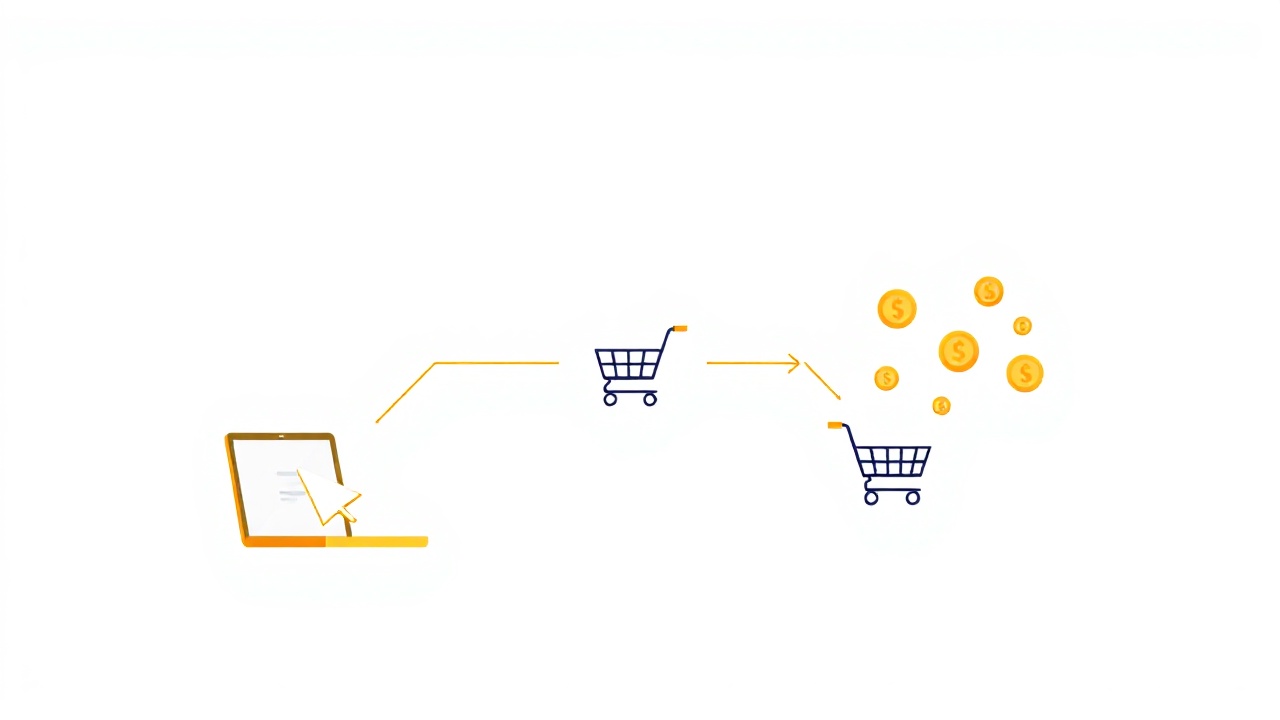
Your affiliate marketing blog earns through three primary content types:
Product reviews are your conversion workhorses. Someone searching "Bluehost review 2026" has already decided they need web hosting—they're deciding which host. A thorough, honest review converts these readers at 3-8%.
Comparison posts capture people weighing options. "Mailchimp vs ConvertKit" or "best standing desks under $500" attract readers with credit cards in hand. These posts typically convert at 2-5% but attract higher-intent traffic.
Informational content builds authority and captures earlier-stage readers. "How to start a podcast" eventually leads readers to microphone recommendations. This content converts lower (0.5-2%) but generates significantly more traffic.
The math works like this: 10,000 monthly visitors × 3% click-through to affiliate links × 4% conversion rate × $25 average commission = $300/month from that traffic level. Scale to 50,000 visitors with optimized content, and you're looking at $1,500-2,500 monthly.
Step-by-step: how to start an affiliate blog
Step 1: Select your niche strategically
Your niche determines everything. Choose wrong, and you'll work hard for minimal returns. Choose right, and moderate effort compounds into significant income.
When evaluating affiliate blog niches, score each option on three criteria:
Commission potential: Products in the $50-500 range with 5-20% commissions hit the sweet spot. A $200 standing desk at 8% commission ($16) beats a $15 book at 4% commission ($0.60) even if the book converts twice as often.
Content opportunity: Search for your potential topics on Google. If page one is dominated by major publications (Forbes, Wirecutter, NYT), think smaller. Look for queries where independent blogs still rank.
Your sustainable interest: You'll write 100+ articles on this topic. Pick something you can stay curious about. Technical expertise helps but isn't mandatory—you can learn as you research.
Strong affiliate blog niches for 2026 include: home office ergonomics, AI writing tools, outdoor cooking equipment, smart home devices, personal finance apps, sustainable kitchenware, and pet technology. Avoid oversaturated spaces like general web hosting or credit cards unless you have a unique angle.
Step 2: Set up your blog infrastructure
Your affiliate marketing blog needs a professional home. You have two paths:
Traditional setup: Purchase a domain ($12-15/year), get hosting ($3-10/month), install WordPress, choose a theme, configure plugins for speed and SEO. Budget 4-8 hours for initial setup if you're new to this.
Accelerated setup: Tools like Site Engine can generate a review blog structure in under a minute, pre-configured for affiliate content. This eliminates the technical hurdles that stop many beginners before they publish their first post.
Whichever path you choose, ensure your site loads in under 3 seconds, displays properly on mobile devices, and has clear navigation. First impressions matter—readers won't trust product recommendations from a site that looks abandoned.
Step 3: Join affiliate programs
Start with Amazon Associates. Yes, commissions are low (1-4% for most categories), but the 24-hour cookie captures everything readers buy, not just what you linked. Someone clicks your link for a $30 book, then buys a $2,000 laptop? You get commission on both.
Then expand to direct affiliate programs. Search "[product name] affiliate program" for brands in your niche. Direct programs typically pay 10-40% commissions with 30-90 day cookies. Software and subscription products often pay recurring commissions—one referral can pay you monthly for years.
Also join affiliate networks: ShareASale, CJ Affiliate, Impact, and PartnerStack aggregate thousands of programs. One dashboard, one payment threshold, multiple brands.
The affiliates earning $10,000+ monthly aren't promoting more products—they're promoting fewer products more thoroughly. Depth beats breadth every time.
Step 4: Develop your affiliate content strategy
Your affiliate content strategy determines whether your blog becomes an income source or an expensive diary. Plan content in three tiers:
Bottom-funnel (40% of content): Product reviews, comparisons, "best X for Y" roundups. These convert visitors to buyers. Start here—these articles prove the model works.
Middle-funnel (35% of content): Buying guides, problem-solution posts, tutorials featuring products. "How to set up a home podcast studio" naturally includes equipment recommendations.
Top-funnel (25% of content): Educational content building authority. "Why good audio matters for podcasters" attracts early-stage readers who'll return when ready to buy.

Map your first 30 articles before writing anything. Identify 10 products worth reviewing, 10 comparisons or roundups, and 10 supporting educational posts. This prevents the common trap of publishing randomly and hoping something works.
Step 5: Create content that actually converts
Affiliate reviews fail when they read like product descriptions. Winning reviews share specific characteristics:
Personal testing signals: Even if you can't physically test every product, demonstrate genuine research. Compare specifications across competitors. Reference user reviews from multiple sources. Show you've done work the reader hasn't.
Honest limitations: Mentioning downsides increases trust. "This treadmill is excellent for walking but too slow for serious runners" helps readers self-select. Readers who buy despite knowing limitations rarely request refunds.
Clear recommendations: End reviews with definitive guidance. "Buy this if you need X. Skip it if you need Y. Consider [alternative] for Z." Wishy-washy conclusions don't convert.
The volume challenge is real—you need 80-150 articles to build meaningful affiliate income. This is where AI assistance becomes practical rather than optional. Content Engine generates long-form, SEO-structured articles that you can enhance with personal insights and current research. The AI handles the structural heavy lifting; you add the expertise and authenticity.
For broader content needs, PLR Engine provides access to over 100,000 done-for-you articles with an integrated AI rewriter. This helps you cover supporting topics quickly without sacrificing quality or originality.
Step 6: Build an email list from day one
The best affiliate blog examples share one trait: they capture emails. Search traffic fluctuates with algorithm changes. Email lists are yours forever.
Offer something valuable in exchange for email addresses: a buying checklist, a comparison spreadsheet, a mini-guide expanding on your most popular topic. Then nurture that list with helpful content and occasional product recommendations.
Email Engine helps you create and send revenue-focused emails without spending hours on copywriting. A single well-crafted email to a list of 2,000 engaged subscribers can generate more affiliate income than a week of search traffic.
Step 7: Publish consistently and optimize
Aim for 3-4 articles weekly during your first six months. Volume builds topical authority—search engines recognize sites that thoroughly cover subjects. After six months, analyze what's working. Double down on content types generating clicks and commissions. Prune or improve underperforming articles.
Track everything: traffic sources, click-through rates on affiliate links, conversion rates by product. Most affiliate programs provide basic analytics. Supplement with Google Analytics and Search Console.
Realistic earnings & timeline
| Timeframe | Articles Published | Monthly Traffic | Expected Monthly Earnings |
|---|---|---|---|
| Months 1-3 | 25-40 | 500-2,000 | $0-50 |
| Months 4-6 | 50-75 | 2,000-8,000 | $50-200 |
| Months 7-12 | 80-120 | 8,000-25,000 | $200-800 |
| Year 2 | 150-250 | 25,000-75,000 | $800-3,000 |
| Year 3+ | 250-400 | 75,000-200,000 | $3,000-10,000+ |
These numbers assume consistent effort in a viable niche. Exceptional execution or fortunate timing can accelerate results. Poor niche selection or inconsistent publishing will slow them. The median successful affiliate blogger reaches $1,000 monthly around month 14-18.
Mistakes that kill beginners
Choosing passion over profit potential: Writing about something you love but nobody searches for is journaling, not business. Validate search demand before committing to a niche. Use free tools like Google Trends and AnswerThePublic to confirm people actually search for your intended topics.
Writing product descriptions instead of recommendations: Copying manufacturer specs helps nobody. Readers want to know: should I buy this? Compare against alternatives. Identify who should and shouldn't purchase. Take positions.
Spreading across too many affiliate programs: Managing 15 affiliate dashboards with different payment thresholds means you'll wait months for payouts. Start with 2-3 programs. Expand only when those are performing.
Ignoring email capture: Every visitor who leaves without subscribing is likely gone forever. Install email capture immediately, even before you have many visitors. A list of 500 engaged subscribers outperforms 10,000 monthly visitors from search.
Expecting results in 90 days: Affiliate blogs are slow-building assets. The effort you invest in month three pays returns in month nine. If you need income next month, this isn't your vehicle. Treat year one as investment; expect returns in year two.
Frequently asked questions
How much does it cost to start an affiliate marketing blog?
You can start an affiliate blog for $50-150 per year covering domain registration and basic hosting. Add another $100-300 annually for premium tools like keyword research software, AI content assistance, and email marketing. Many beginners start under $200 total for year one.
How long does it take for an affiliate blog to make money?
Most affiliate blogs take 6-12 months to earn their first consistent income. Expect $100-500 per month around months 8-12 with consistent publishing. Reaching $2,000+ monthly typically requires 18-24 months of focused effort and 100+ quality articles.
What are the best affiliate blog niches for beginners in 2026?
High-potential affiliate blog niches for 2026 include home office equipment, AI productivity tools, sustainable home products, pet technology, personal finance apps, and health monitoring devices. Choose niches with products priced $50-500 for optimal commission potential.
Do I need to show my face or use my real name on an affiliate blog?
No, you can run a successful affiliate blog anonymously using a pen name or brand name. Many six-figure affiliate sites operate without personal branding. What matters is helpful content, not personal celebrity. Focus on building topical authority through expertise, not personality.
Is affiliate marketing blogging still worth it with AI search changing everything?
Yes, affiliate blogging remains profitable in 2026, but strategy matters more than ever. AI search engines cite authoritative content, so detailed reviews with original insights still drive traffic. The key is creating genuinely helpful content that AI summaries link back to as a source.
The bottom line
An affiliate marketing blog remains one of the most accessible paths to online income in 2026—but only if you approach it as a business, not a hobby. Pick a niche with real buyer intent, publish helpful content at scale using AI to maintain velocity, and give yourself 12-18 months to see meaningful results. The model works; your execution determines whether it works for you.
Get the AI tools to do all of this — free
Create a free Elite Engines account and get 5 AI money-making engines instantly. No credit card.