Quick Summary
You don't need to show your face to build a profitable YouTube channel in 2026. By combining proven faceless formats—like documentaries, listicles, and explainers—with AI-powered scripting, voiceover, and thumbnail creation, you can produce monetizable content in 2-3 hours per video. This guide breaks down the exact workflow from niche selection to your first $1,000 month, including the realistic timeline most creators won't tell you about.
Can you really make money with this in 2026?
As of early 2026, faceless YouTube channels remain one of the most accessible routes to online income. The model isn't new—channels like Bright Side, WatchMojo, and Kurzgesagt proved it years ago—but the tools have changed everything.
Here's what's different now: AI voiceover sounds genuinely human. Script generation has matured beyond generic filler. And the barrier to professional-looking visuals has dropped to near zero. This means a solo creator working 10-15 hours per week can compete with content that previously required small production teams.
The numbers back this up. According to YouTube's own creator reports, channels in the finance, education, and entertainment categories average $12-30 CPM (cost per thousand views). A faceless finance channel hitting 500,000 monthly views—achievable within 18 months of consistent posting—generates $6,000-$15,000 monthly from AdSense alone, before sponsorships or affiliate revenue.
The catch? Competition has increased. The same tools available to you are available to everyone else. Success in 2026 requires smarter niche selection, better hooks, and a workflow optimized for quality over quantity.
How faceless YouTube channel money actually works
The mechanics are straightforward once you understand the revenue streams.
YouTube AdSense remains the foundation. Once you hit 1,000 subscribers and 4,000 watch hours (or 10 million Shorts views), you're eligible for the Partner Program. YouTube places ads on your videos and shares roughly 55% of the revenue with you. Your earnings depend on three factors: total watch time, your niche's CPM, and audience geography (US/UK viewers pay significantly more than most other regions).
Affiliate marketing adds a second layer. Faceless channels reviewing products, software, or services can include affiliate links in descriptions. A tech comparison channel might earn $50-200 per sale from software affiliates, often exceeding their AdSense income.
Sponsorships become viable once you pass 50,000-100,000 subscribers. Brands pay $1,000-$10,000+ per sponsored segment depending on niche and engagement. Faceless channels actually have an advantage here—sponsors care about your audience demographics, not your personal brand.
Digital products represent the highest-margin play. A faceless AI tutorial channel can sell courses, templates, or tools to its audience. This works because you've built trust through useful content without needing personal celebrity.
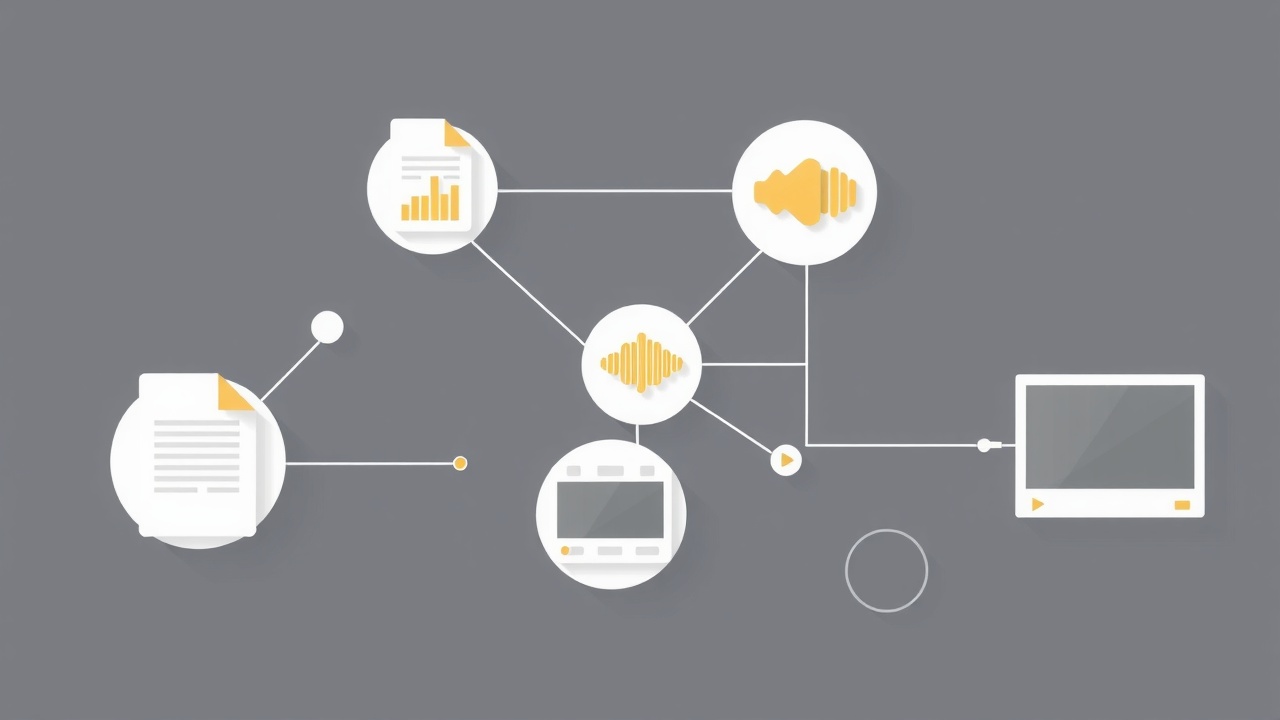
The workflow itself follows a repeatable pattern: research trending topics → write a script with strong hooks → record or generate voiceover → edit with stock footage and motion graphics → design a clickable thumbnail → publish and optimize. Each step can now be accelerated or automated with AI.
Step-by-step: how to start a faceless YouTube channel
1. Choose a niche with proven demand and high CPM
Not all faceless YouTube ideas are created equal. You want the intersection of three factors: content you can consistently produce, topics people actively search for, and advertisers willing to pay premium rates.
High-CPM niches for 2026:
- Personal finance and investing ($20-40 CPM)
- Business and entrepreneurship ($18-35 CPM)
- Technology and software tutorials ($15-30 CPM)
- Real estate and luxury lifestyle ($15-28 CPM)
- Health and wellness ($12-25 CPM)
- True crime and mysteries ($8-15 CPM)
- History and educational content ($8-15 CPM)
Avoid oversaturated formats like generic compilation videos or content that triggers advertiser restrictions (true crime involving recent events, controversial topics). Study 10-15 successful faceless channels in your chosen niche before committing.
2. Set up your channel infrastructure
Create a branded channel name that works without a personal identity. Abstract names (Think Media, The Infographics Show) outperform generic descriptors. Design a simple logo and banner using Canva or similar tools—you're building a media brand, not a personal brand.
Set up these elements before your first upload:
- Channel description with relevant keywords
- Links to any affiliate sites or social accounts
- Organized playlists for content categories
- Custom URL (available after 100 subscribers)
If you plan to expand beyond YouTube with a blog or review site for affiliate income, the Site Engine can generate that companion property in under a minute, giving you an owned platform for longer-form content and email capture.
3. Develop your scripting system
Scripts make or break faceless content. Without your personality carrying weak material, every word must earn its place. The structure that consistently performs:
First 30 seconds: A hook that creates curiosity or promises specific value. "Most people lose money on index funds because of one mistake" beats "Today we're talking about investing."
Body: Clear sections with pattern interrupts every 60-90 seconds. Each section should answer an implicit question or reveal something surprising.
Call to action: Subtle prompts for likes/subscribes woven into content, not bolted on at the end.
Writing scripts from scratch takes 2-4 hours per video. The YouTube Viral Engine compresses this significantly by generating hooks, full scripts, and retention-optimized structures based on your topic and niche. You'll still edit the output, but starting from a solid draft beats staring at a blank page.
The difference between a 30% average view duration and a 50% average view duration is often just the first 30 seconds. Nail your hook or nothing else matters.
4. Produce or generate voiceover
You have three options:
Record yourself: Cheapest option. Use a $100 USB microphone (Audio-Technica ATR2100x or similar), record in a quiet room, and edit in Audacity or Descript. Your voice becomes channel identity without showing your face.
AI voiceover: Tools like ElevenLabs, Murf, and WellSaid Labs produce broadcast-quality voices for $20-50/month. Best for high-volume production or if you dislike your recorded voice. Customize tone, pacing, and emphasis.
Hire voice talent: Fiverr and Voices.com offer professional narration for $50-200 per video. Highest quality but reduces margins significantly.
Most successful faceless creators in 2026 use a hybrid: AI voiceover for standard content, personal recording for flagship videos, and hired talent for special projects.
5. Create visuals that retain attention
Faceless videos typically use these visual formats:
- Stock footage with motion graphics: B-roll from Storyblocks, Artgrid, or Pexels layered with text animations and data visualizations. Works for educational and documentary content.
- Screen recordings: Tutorials, software reviews, and how-to content. Simple to produce with Loom or OBS.
- Custom animation: Higher barrier but distinctive. Tools like Vyond or even AI video generators create unique visuals.
- AI-generated imagery: Midjourney, DALL-E, and similar tools produce custom visuals for concepts that don't exist in stock libraries.
Edit in DaVinci Resolve (free), Premiere Pro, or CapCut. Aim for a visual change every 3-5 seconds to maintain engagement.
6. Design thumbnails that demand clicks
Your thumbnail determines whether anyone sees your carefully crafted content. Faceless channels must work harder here since you can't rely on a recognizable face.
Winning thumbnail patterns:
- High contrast colors (yellow/black, red/white)
- Large, readable text (3-5 words maximum)
- Emotional imagery or surprising visuals
- Clear subject focus with minimal clutter
- Consistent branding elements across videos
Study your competitors' best-performing videos (sort by popular) and reverse-engineer their thumbnail approach. The Thumbnail Engine generates click-optimized designs based on your title and niche, giving you professional options without graphic design skills.
7. Optimize and publish strategically
Upload timing matters less than consistency, but publishing when your audience is active helps initial traction. YouTube Analytics reveals your viewers' peak hours after a few videos.
Optimization checklist:
- Title includes target keyword naturally (front-loaded when possible)
- Description starts with a hook, includes keywords, and adds timestamps
- Tags cover primary topic and related searches
- End screen promotes related videos to boost session time
- Cards link to relevant content at strategic moments
Post 2-4 videos weekly initially to feed the algorithm data about your channel. Quality and consistency beat raw volume.
Realistic earnings & timeline
Most faceless YouTube channel money guides exaggerate earnings. Here's what actually happens:
| Timeline | Typical Milestone | Estimated Monthly Earnings |
|---|---|---|
| Month 1-3 | 0-500 subscribers, finding your format | $0 |
| Month 4-6 | 500-2,000 subscribers, improving retention | $0-50 |
| Month 7-12 | Partner Program achieved, 5K-15K subscribers | $100-500 |
| Month 12-18 | Consistent growth, 15K-50K subscribers | $500-2,000 |
| Month 18-24 | Established channel, 50K-150K subscribers | $2,000-8,000 |
| Year 3+ | Mature channel, 150K+ subscribers | $5,000-25,000+ |
These ranges assume a mid-to-high CPM niche, consistent posting (3+ videos weekly), and continuous improvement in content quality. Outliers exist—some channels explode faster, many plateau lower. The median outcome beats most side hustles but requires real commitment.
Affiliate and sponsorship income can double or triple these numbers for channels in commercial niches. A personal finance channel with 100K subscribers might earn $5,000/month from AdSense and $10,000+/month from financial product affiliates.
Mistakes that kill beginners
Choosing passion over profit. Your favorite obscure topic may have zero search volume. Validate demand before committing months of effort. Use YouTube search suggestions and tools like VidIQ to confirm people actually want your content.
Ignoring the first 30 seconds. YouTube's algorithm weights early retention heavily. A weak hook tanks your video regardless of how good the rest is. Study viral videos in your niche and model their opening patterns.
Inconsistent posting. The algorithm rewards channels that train viewers to expect regular content. Posting 10 videos in week one then disappearing for a month kills momentum. Set a sustainable schedule and maintain it.
Skipping thumbnail iteration. Your first thumbnail design rarely performs best. Successful creators test 2-3 thumbnail variations and swap based on CTR data. YouTube Studio provides A/B testing features—use them.
Copying without differentiating. Studying competitors is smart. Cloning them exactly is death. Viewers have no reason to watch your version of content they've already seen. Find your angle—a unique format, deeper research, better production, or a distinctive voice.
Frequently asked questions
Can you really make money on YouTube without showing your face?
Yes. Thousands of faceless channels earn six figures annually in niches like finance explainers, true crime, and meditation content. YouTube pays based on watch time and ad impressions, not whether your face appears on screen.
How much does it cost to start a faceless YouTube channel in 2026?
You can start for under $50/month using AI voiceover tools, stock footage subscriptions, and free editing software. Premium setups with better AI tools and custom graphics typically run $100-200/month.
How long until a faceless YouTube channel makes money?
Most channels reach YouTube Partner Program requirements (1,000 subscribers and 4,000 watch hours) in 6-12 months with consistent posting. First significant income of $500+/month typically takes 12-18 months.
What are the best niches for faceless YouTube channels in 2026?
Top-performing niches include personal finance, AI tutorials, true crime, luxury lifestyle, scary stories, history documentaries, meditation and sleep content, and tech comparisons. Finance and tech pay the highest CPMs.
Does YouTube penalize faceless or AI-generated content?
No. YouTube's policies focus on content quality and originality, not production method. However, you must disclose AI-generated content in certain cases and avoid mass-producing low-effort videos that violate spam policies.
The bottom line
Faceless YouTube channel money is real, but it's not passive income—at least not initially. You're trading on-camera anxiety for production skills and systems thinking. The creators who win in 2026 treat this as a media business: consistent publishing, relentless optimization, and strategic use of AI tools to compete with larger operations. Start with one niche, one format, and one video. Then do it 99 more times.
Get the AI tools to do all of this — free
Create a free Elite Engines account and get 5 AI money-making engines instantly. No credit card.