Quick Summary
Etsy vs Gumroad is not about which platform is universally better—it is about which one fits your current business stage. Etsy brings built-in traffic but takes more control over your customer relationships. Gumroad gives you ownership and flexibility but requires you to drive your own traffic. This head-to-head breakdown covers fees, audience access, data ownership, and the realistic earnings you can expect from each platform in 2026.
Can you really make money with this in 2026?
As of early 2026, both Etsy and Gumroad remain legitimate income sources for digital product sellers—but the landscape has shifted. Etsy reported over 90 million active buyers in late 2025, and digital downloads continue to be one of its fastest-growing categories. Planners, templates, wall art, and educational printables dominate the marketplace.
Gumroad, meanwhile, has paid out over $1 billion to creators since its founding, with digital products, courses, and memberships driving the bulk of transactions. The platform's creator-first positioning makes it particularly strong for those with existing audiences on YouTube, newsletters, or social media.
Here is the honest reality: Etsy offers discovery, Gumroad offers ownership. You can absolutely make money on both. The question is which one matches where you are right now and where you want to go.

How Etsy vs Gumroad actually works
Understanding the mechanics of each platform helps you make a smarter choice for your digital product business.
Etsy: The marketplace model
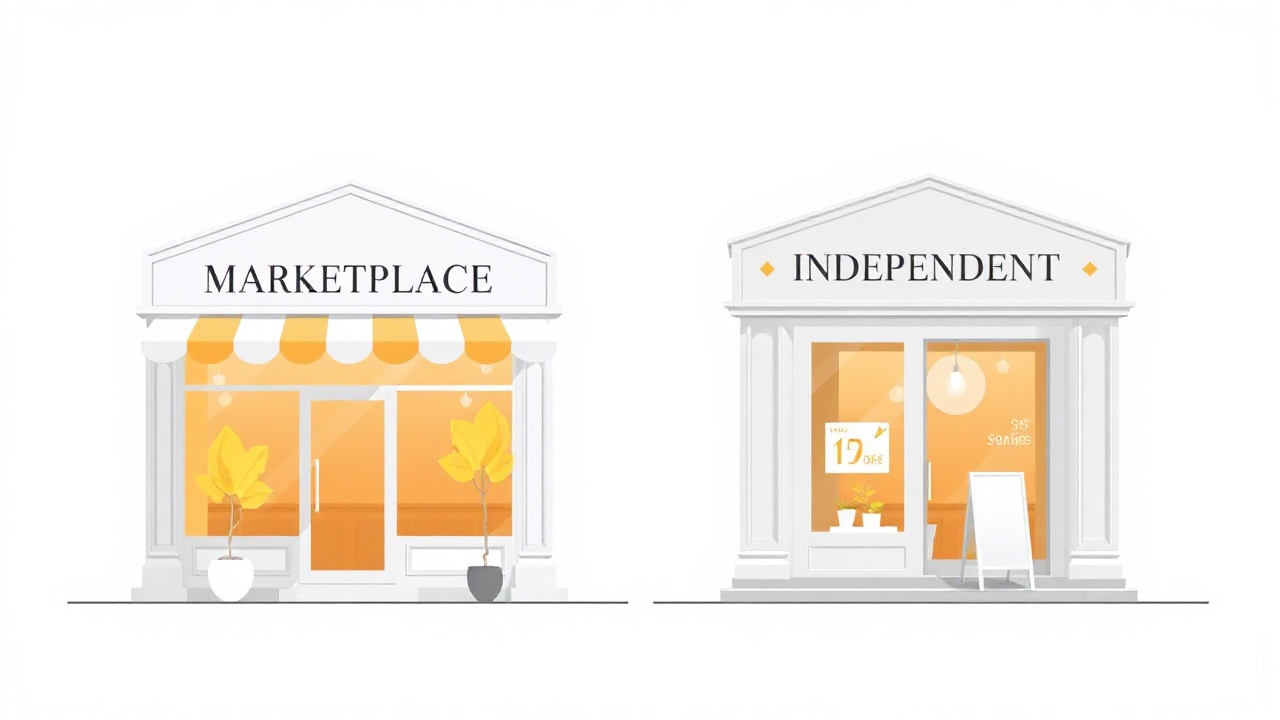
Etsy functions like a shopping mall. Millions of buyers come to browse, and your products compete for attention alongside thousands of other sellers. You list your digital downloads, optimize for Etsy's search algorithm, and pay fees on each sale.
The platform handles payment processing, provides buyer protection, and creates a trust layer that makes customers comfortable purchasing from unknown sellers. You get exposure to warm buyers actively searching for products like yours.
The tradeoff: Etsy controls the customer relationship. You cannot email buyers directly, you compete on price within the marketplace, and algorithm changes can tank your visibility overnight.
Gumroad: The direct-to-consumer model
Gumroad works like your own digital storefront. You create a product page, set your price, and share the link with your audience. There is no marketplace discovery—buyers come because you sent them there through your content, social media, or email list.
You get complete customer data including email addresses, enabling direct marketing and relationship building. Gumroad also supports memberships, subscriptions, and tiered pricing that Etsy cannot match.
The tradeoff: Zero built-in traffic. If you do not have an audience, you do not have sales. Your success depends entirely on your marketing ability.
Fee comparison breakdown
Let us get specific with the numbers that actually matter.
Etsy fees:
- $0.20 listing fee per item (renews every 4 months or upon sale)
- 6.5% transaction fee on total sale price including shipping
- 3% + $0.25 payment processing fee
- 15% Offsite Ads fee if applicable (mandatory for sellers over $10k/year)
Gumroad fees:
- 10% flat fee on each sale
- Payment processing included in the 10%
- No listing fees
- No mandatory advertising fees
On a $10 digital product:
- Etsy: You keep approximately $8.83
- Gumroad: You keep approximately $9.00
On a $50 digital product:
- Etsy: You keep approximately $44.15
- Gumroad: You keep approximately $45.00
On a $200 course or bundle:
- Etsy: You keep approximately $176.60 (plus Offsite Ads risk)
- Gumroad: You keep approximately $180.00
The fee difference narrows at lower price points but Gumroad becomes the clear winner for premium products.
Step-by-step: how to start
Whether you choose Gumroad or Etsy, here is the practical path to launching your first digital products.
Starting on Etsy
Step 1: Research profitable niches
Before creating anything, analyze what actually sells. Search Etsy for digital downloads in your interest area. Look at shops with thousands of sales and study their bestsellers. Wedding planners, budget spreadsheets, social media templates, and wall art consistently perform well.
Step 2: Create your digital products
Quality matters more than quantity in 2026. Buyers have seen enough low-effort templates. Focus on solving specific problems with polished design. If you are creating printables, the Etsy Engine can help you generate professional designs optimized for what Etsy buyers actually purchase.
Step 3: Optimize your listings for search
Etsy's algorithm prioritizes relevance. Use all 13 tags, write keyword-rich titles (front-load the important terms), and craft descriptions that answer buyer questions. Your thumbnail image determines click-through rates—make it crystal clear what the buyer receives.
Step 4: Price strategically
Study competitor pricing, then position yourself based on value. Bundles typically convert better than single items. A $15 bundle of five templates often outsells five $5 individual listings.
Step 5: Launch with reviews in mind
Etsy's algorithm favors shops with positive reviews. Consider launching at a lower introductory price to generate initial sales and reviews, then increase pricing once you have social proof.

Starting on Gumroad
Step 1: Build or leverage your audience first
Gumroad works best when you already have people who trust you. This could be email subscribers, YouTube viewers, Twitter followers, or newsletter readers. If you are starting from zero, consider building a simple content platform first using something like Site Engine to establish your expertise before launching products.
Step 2: Create a flagship product
Unlike Etsy where volume helps visibility, Gumroad rewards depth. Create one comprehensive product that solves a significant problem for your audience. A $50 guide that transforms someone's workflow beats ten $5 downloads.
Step 3: Set up your Gumroad storefront
Customize your profile, connect your payment method, and create a compelling product page. Use video previews, detailed descriptions, and clear deliverable lists. Gumroad's cover image is your first impression—invest time making it professional.
Step 4: Implement your launch strategy
Plan a proper launch. Email your list, post on social media, and consider a limited-time discount for early buyers. Gumroad supports discount codes, making launch promotions easy to execute.
Step 5: Build your email funnel
This is where Gumroad shines. Every buyer's email address becomes yours. Set up a post-purchase email sequence that delivers additional value and introduces your other products. This is how Gumroad sellers turn one-time buyers into repeat customers.
The real question is not which platform has lower fees—it is which one lets you build the business you actually want to run.
Realistic earnings & timeline
Let us set honest expectations based on what sellers actually report.
| Platform | Months to first sale | Monthly income (6 months) | Monthly income (12 months) | Monthly income (24 months) |
|---|---|---|---|---|
| Etsy (no audience) | 1-4 weeks | $50-$300 | $200-$1,000 | $500-$3,000 |
| Etsy (optimized shop) | 1-2 weeks | $200-$800 | $500-$2,500 | $1,500-$8,000 |
| Gumroad (no audience) | 2-6 months | $0-$50 | $20-$200 | $100-$500 |
| Gumroad (1k+ email list) | 1-2 weeks | $200-$1,000 | $500-$3,000 | $2,000-$10,000+ |
| Gumroad (10k+ audience) | Same day | $1,000-$5,000 | $2,000-$15,000 | $5,000-$50,000+ |
These ranges represent active sellers who consistently improve their products and marketing. Passive income is real, but it requires upfront work.
Etsy delivers faster results for beginners because the traffic already exists. Gumroad has higher ceilings for those who invest in audience building, but the timeline to meaningful income is longer without an existing following.
The best platform for digital products often depends on your patience and existing assets more than the platforms themselves.
Mistakes that kill beginners
1. Treating Etsy like Gumroad (and vice versa)
Sellers fail when they apply the wrong strategy to each platform. Etsy rewards consistent new listings, keyword optimization, and competitive pricing. Gumroad rewards deep audience relationships and premium positioning. A $5 template strategy works on Etsy but flops on Gumroad. A $200 course makes sense on Gumroad but confuses Etsy buyers.
2. Ignoring customer data on Gumroad
The entire point of Gumroad is owning your customer relationships. Sellers who collect emails and never send anything waste their biggest advantage. Build an email sequence. Share valuable content. Create a relationship beyond the transaction.
3. Competing purely on price on Etsy
Racing to the bottom destroys margins. When you see competitors selling planners for $2, the answer is not matching their price—it is creating a more valuable product worth $15. Bundle more templates, add bonus content, or target a more specific niche willing to pay premium prices.
4. Launching on Gumroad without an audience
This is the most common Gumroad failure. Creators build a product, publish it, and wait for sales that never come. Gumroad is not an Etsy alternative for discovery. It is a tool for monetizing attention you already have. Build the audience first, even if it takes months.
5. Neglecting visual presentation
Digital products are judged by their packaging. Blurry mockups, generic thumbnails, and cluttered preview images kill conversions on both platforms. Invest time in presentation. Your product images do the selling when you are not there to explain.
Frequently asked questions
Is Etsy or Gumroad better for beginners selling digital products?
Etsy is generally better for beginners because it provides built-in traffic from millions of monthly shoppers. You do not need an existing audience. Gumroad requires you to bring your own traffic, making it harder for those just starting out without a following.
What are the fees for selling digital products on Etsy vs Gumroad?
Etsy charges a $0.20 listing fee, 6.5% transaction fee, and 3%+ payment processing. On a $10 product, you keep roughly $8.83. Gumroad charges a flat 10% plus payment processing, leaving you with approximately $8.61 on the same sale. At higher price points, Gumroad becomes more cost-effective.
Can I own my customer email list on Etsy?
No. Etsy does not share customer email addresses with sellers. You can only contact buyers through Etsy's messaging system for order-related communication. Gumroad gives you full access to customer emails, allowing you to build a direct relationship and email list.
Which platform is better for high-priced digital products?
Gumroad is better for premium digital products priced above $50. Its flat 10% fee becomes more economical at higher price points, and the platform supports memberships, subscriptions, and course-style delivery that justify premium pricing.
Should I sell on both Etsy and Gumroad at the same time?
Yes, many successful sellers use both platforms strategically. Etsy works as a discovery engine to attract new customers with lower-priced products. Gumroad serves as your owned storefront for premium products, upsells, and building direct customer relationships through email marketing.
The bottom line
Etsy vs Gumroad is not a permanent choice—it is a strategic decision based on where you are today. Start on Etsy if you need traffic and want faster validation. Move to Gumroad as you build an audience and want more control. The smartest sellers use both, treating Etsy as their acquisition channel and Gumroad as their profit maximizer.