
Quick Summary
Digital marketing for beginners doesn't have to mean drowning in jargon or spending thousands on courses. In 2026, AI tools have collapsed the learning curve dramatically—you can practice real campaigns, build actual assets, and develop marketable skills without a budget. This guide breaks down the five core channels, shows you exactly how to start digital marketing with hands-on practice, and gives you honest numbers on what to expect.
Can you really make money with this in 2026?
As of early 2026, digital marketing remains one of the most accessible paths to both employment and independent income. The U.S. Bureau of Labor Statistics projects marketing specialist roles growing 6% through 2032, but the real story is in freelance and contract work.
Upwork's 2025 Freelance Forward report showed digital marketing as the third most-requested skill category, with average hourly rates between $25-$75 for intermediate practitioners. Entry-level freelancers on platforms like Fiverr regularly earn $15-$30 per hour for basic tasks like social media management or email copywriting.
The honest answer: yes, you can make money. But "digital marketing" is broad. The beginners who earn fastest are those who specialize in one channel, build proof of their skills, and actively pursue clients or jobs. Those who dabble in everything while mastering nothing tend to stall.
Companies spent an estimated $870 billion globally on digital advertising in 2025. That money flows to people who can manage it effectively. Even a small slice of that spending represents real opportunity for skilled practitioners.
How digital marketing actually works
Digital marketing is simply using online channels to connect products or services with people who want them. That's it. Everything else is tactics.
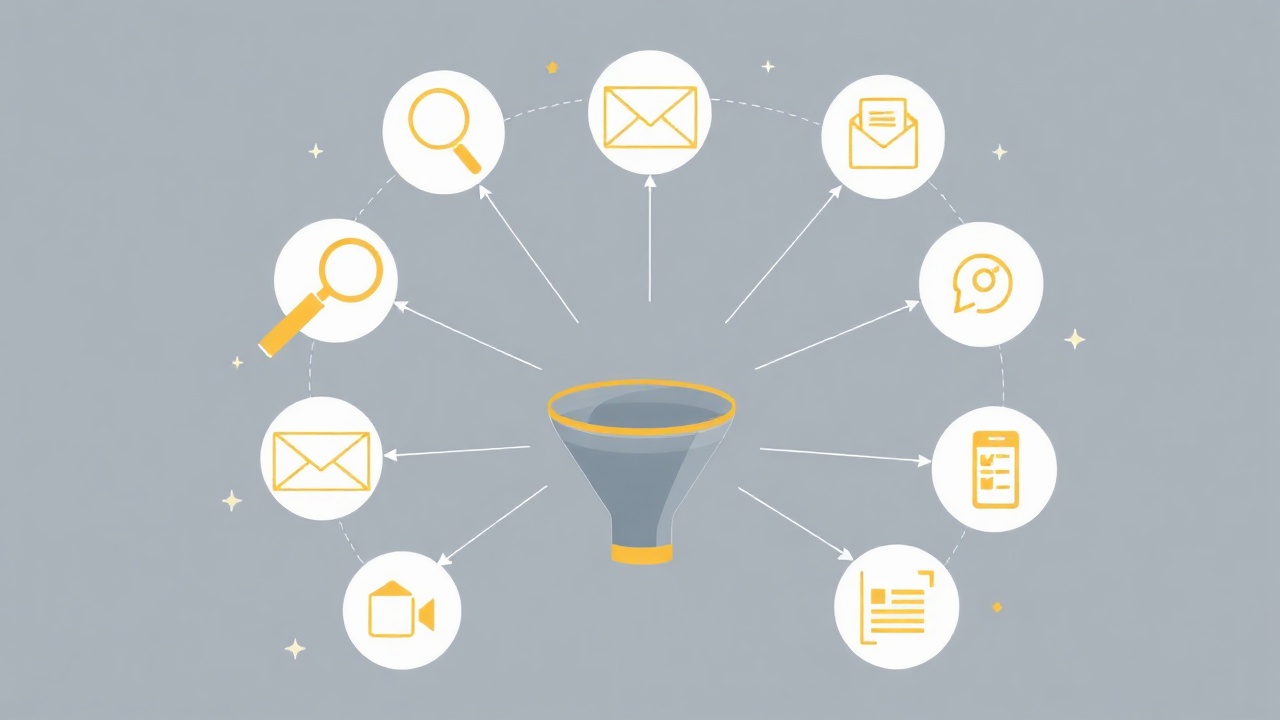
The core channels are:
- Search Engine Optimization (SEO) — Getting your content to appear when people search Google or Bing
- Content Marketing — Creating valuable articles, videos, or resources that attract and engage audiences
- Email Marketing — Building a subscriber list and nurturing relationships through direct messages
- Social Media Marketing — Growing and engaging audiences on platforms like Instagram, LinkedIn, TikTok, or X
- Paid Advertising — Buying visibility through Google Ads, Meta Ads, or other platforms
Every channel follows the same basic loop: attract attention, capture interest, build trust, prompt action. The mechanics differ—an SEO specialist optimizes page structure while a paid ads manager adjusts bidding strategies—but the goal is identical.
What's changed in 2026 is speed. AI tools now handle the tedious production work—first drafts, image generation, data analysis, A/B test suggestions—leaving humans to focus on strategy, creativity, and relationship building. This means you can learn digital marketing faster because you can practice more frequently.
Step-by-step: how to start
Here's the practical path to learn digital marketing in 2026, starting from zero.
Step 1: Pick one channel to focus on first
Don't try to master everything simultaneously. Choose based on your natural strengths:
- Good at writing? Start with content marketing or email
- Analytical and data-driven? Start with SEO or paid ads
- Visual and creative? Start with social media
- Comfortable on camera? Start with video content for YouTube or TikTok
You'll eventually learn multiple channels, but depth in one area beats shallow knowledge across five.
Step 2: Complete one free certification
These establish baseline credibility and ensure you understand fundamentals:
- Google Digital Marketing Certificate (Coursera) — Broad foundation
- HubSpot Content Marketing Certification — Content and inbound focus
- Google Analytics Certification — Data and measurement
- Meta Blueprint — Social and paid advertising
Budget 15-25 hours for completion. Don't stack certifications endlessly—one or two is enough to prove you're serious.
Step 3: Build something real to practice on
Certifications teach theory. Skill comes from doing. You need a live project.
The fastest approach: create a simple website or blog in a niche you find interesting. This gives you a canvas to practice SEO, content creation, email collection, and eventually paid traffic. The Site Engine can generate a functional blog or review site in under a minute, giving you immediate infrastructure to work with instead of spending weeks on technical setup.
Your practice site doesn't need to be profitable. It needs to be real enough that you can implement actual campaigns, track actual metrics, and build actual proof.
Step 4: Create your first content assets
Practice the production side of digital marketing by creating:
- 3-5 SEO-optimized articles targeting specific keywords
- A lead magnet (free PDF, checklist, or guide) to practice email list building
- 10-15 social media posts scheduled across two weeks
- A 5-email welcome sequence for new subscribers
This sounds like a lot, but AI tools compress the timeline dramatically. For long-form articles, Content Engine produces SEO-ready drafts that you refine and personalize—cutting article creation from hours to minutes. For lead magnets, the Lead Magnet Engine generates complete PDFs with matching landing pages, letting you practice the entire lead-capture workflow without design skills.
The point isn't perfection. It's developing muscle memory for production while learning what resonates with audiences.
"The best digital marketers aren't the ones who know the most tactics. They're the ones who've run the most experiments."
Step 5: Learn to read the data
Set up Google Analytics 4 and Google Search Console on your practice site. Install the Meta Pixel if you're practicing social advertising. Then actually look at the numbers weekly.
Key metrics to understand:
- Traffic sources — Where visitors come from
- Bounce rate — Percentage leaving immediately
- Time on page — Engagement indicator
- Conversion rate — Percentage taking desired action
- Click-through rate (CTR) — Email opens and link clicks
You don't need advanced analytics skills yet. You need the habit of checking data and asking "why did this happen?" That curiosity separates professionals from amateurs.

Step 6: Run a small paid campaign
Once you understand organic channels, spend $50-$100 on paid advertising. This isn't about ROI—it's education.
Start with Meta Ads (Facebook/Instagram) because the learning interface is more forgiving than Google Ads. Create a simple campaign promoting your lead magnet or content. Watch how targeting works, how budgets deplete, how results vary by creative.
This small investment teaches more about digital marketing mechanics than any course. You'll understand why businesses pay for skilled practitioners.
Step 7: Build your portfolio and start pitching
After 2-3 months of hands-on practice, compile your work:
- Screenshots of traffic growth
- Examples of content you've created
- Email open rates and click rates
- Any conversion data from lead magnets or campaigns
Package this into a simple portfolio page. Then start pitching:
- Apply to entry-level marketing positions
- Offer services on Upwork or Fiverr
- Reach out to small local businesses
- Join marketing communities and respond when people need help
Your first clients or jobs won't pay well. Take them anyway. Real experience accelerates everything.
Realistic earnings & timeline
Here's what to honestly expect at different stages:
| Stage | Timeline | Typical Earnings | What You're Doing |
|---|---|---|---|
| Learning fundamentals | Weeks 1-8 | $0 | Certifications, practice site, first content |
| Building proof | Months 2-4 | $0-$500/month | Running real campaigns, tracking results, first small gigs |
| Entry-level work | Months 4-8 | $500-$2,000/month | Freelance projects, part-time roles, small retainers |
| Intermediate skills | Months 8-18 | $2,000-$5,000/month | Consistent client work, full-time position, or growing agency |
| Proficient practitioner | 18+ months | $5,000-$10,000+/month | Specialized expertise, premium rates, management roles |
These numbers assume consistent effort—10+ hours weekly of focused practice and work. Sporadic effort produces sporadic results.
Some people accelerate faster by focusing intensely on one high-value skill like paid advertising or email marketing automation. Others prefer broader skills at moderate depth. Both paths work; the key is sustained practice.
Mistakes that kill beginners
1. Consuming without creating
Watching YouTube tutorials feels productive. It isn't. You learn digital marketing by doing digital marketing. Limit your learning intake to 30% of your time; spend 70% creating, testing, and analyzing.
2. Trying to monetize before developing skills
Don't pitch clients after watching two videos. Bad work creates bad reputation. Spend 8-12 weeks building real skills on practice projects before taking money. Your first clients should get competent work, not practice.
3. Ignoring email because it seems "old"
Email marketing consistently delivers the highest ROI of any digital channel—averaging $36 returned for every $1 spent. Beginners chase trendy platforms while ignoring the channel that actually converts. Learn email early. The Email Engine lets you practice writing and structuring campaigns without needing an established list or expensive software.
4. Spreading across too many platforms
You don't need presence on Instagram, TikTok, LinkedIn, X, YouTube, Pinterest, and Threads simultaneously. Pick one or two platforms where your target audience actually spends time. Master those before expanding.
5. Skipping the data review
Many beginners create content, post it, and never check what happened. This is like practicing basketball with your eyes closed. Schedule 30 minutes weekly to review analytics. Look for patterns. Adjust based on evidence, not assumptions.
Frequently asked questions
Can I learn digital marketing for free in 2026?
Yes. Google, HubSpot, and Meta offer free certifications. YouTube has thousands of hours of tutorials. AI tools now let you practice real campaigns without spending money on ads or software subscriptions. The knowledge is free—your investment is time and consistent effort.
How long does it take to learn digital marketing?
You can grasp the fundamentals in 4-8 weeks of focused study. Building job-ready skills typically takes 3-6 months. Becoming genuinely proficient—where clients pay premium rates—usually requires 12-18 months of hands-on practice and real campaign experience.
What digital marketing skills are most in demand in 2026?
AI-assisted content creation, paid advertising (especially Meta and Google), email marketing automation, SEO strategy, and analytics interpretation are the most requested skills. Employers specifically want people who can use AI tools effectively while maintaining quality and brand voice.
Do I need a degree to work in digital marketing?
No. Digital marketing is one of the most accessible fields because results speak louder than credentials. A strong portfolio showing real campaigns, measurable outcomes, and certifications from Google or HubSpot will get you hired faster than a marketing degree with no practical experience.
What's the best digital marketing channel for beginners to start with?
Email marketing or content marketing. Both have low barriers to entry, don't require ad spend to practice, and teach you foundational skills—copywriting, audience understanding, and analytics—that transfer to every other channel. Start there before moving to paid advertising.
The bottom line
Digital marketing for beginners in 2026 is more accessible than ever—AI tools handle the grunt work, free resources teach the strategy, and real campaigns cost almost nothing to practice. The gap between successful beginners and everyone else isn't talent or luck; it's consistent action over 6-12 months while others watch tutorials and wait for the "right time." Start today, build something real, and let the results stack.
Get the AI tools to do all of this — free
Create a free Elite Engines account and get 5 AI money-making engines instantly. No credit card.