
Quick Summary
A cash cow YouTube channel generates passive income through ad revenue and affiliate marketing without requiring you to appear on camera. In 2026, the model remains profitable if you choose the right niche, build efficient production systems, and focus on genuine viewer value rather than cheap shortcuts. This guide walks you through the exact steps to launch, automate, and scale a faceless channel to consistent four-figure monthly income.
Can you really make money with this in 2026?
As of early 2026, cash cow YouTube channels remain one of the most accessible paths to online income—but the landscape has shifted significantly from the gold rush days of 2020-2022.
Here's the honest picture: YouTube ad revenue hit $36.1 billion in 2025, and the platform continues growing despite increased competition. However, YouTube's algorithm has become dramatically better at identifying and suppressing low-effort content. The channels that thrived in 2023 by pumping out generic compilation videos now struggle to get views.
What works now? Channels that combine automation efficiency with genuine editorial value. Think of yourself as a digital media company rather than a content farm. The creators earning $5,000-15,000 monthly from faceless channels in 2026 treat their content like a real publication—researched, well-produced, and actually useful to viewers.
The CPM (cost per thousand views) rates tell the story. Finance and business channels still command $15-30 CPMs, while generic entertainment hovers around $2-5. A single video earning 100,000 views in a high-CPM niche generates $1,500-3,000, while the same views in a low-CPM niche might net you $200.
So yes, the money is real. But the path requires more sophistication than it did three years ago.
How a cash cow YouTube channel actually works
The business model is straightforward once you understand the moving pieces.
Revenue streams:
- YouTube AdSense: Your primary income once monetized. YouTube places ads on your videos and pays you roughly 55% of the revenue.
- Affiliate marketing: You recommend products in your niche and earn commissions when viewers purchase through your links.
- Sponsorships: As your channel grows, brands pay flat fees for dedicated mentions or integrations.
- Digital products: Some creators develop courses or templates related to their niche.
The faceless production model:
Unlike traditional YouTubers who build personal brands, a faceless cash cow channel uses stock footage, screen recordings, animations, or AI-generated visuals combined with voiceover (either your own voice, AI voice, or hired talent). This creates a scalable, sellable asset that doesn't depend on any single personality.
The automation stack:
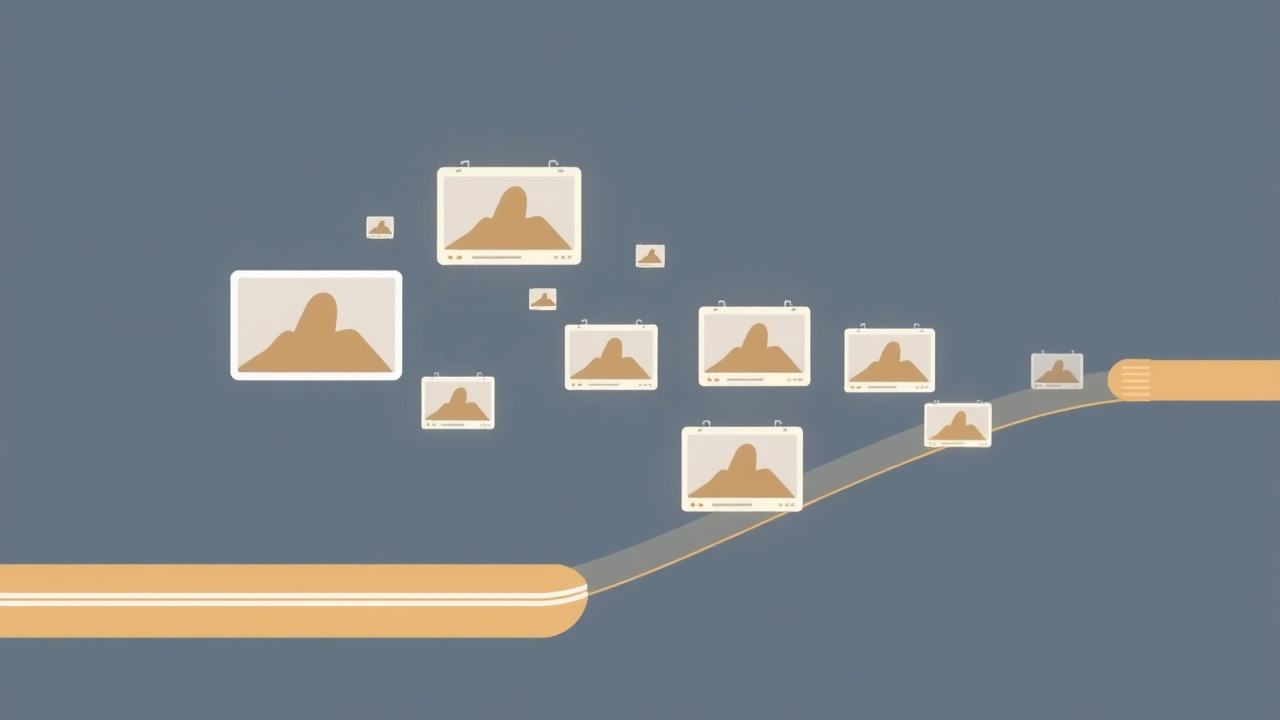
Successful operators build systems where each video follows a repeatable process: research → script → voiceover → visuals → editing → thumbnail → upload → optimization. By creating standard operating procedures for each step, you can delegate most tasks to freelancers or AI tools while focusing on strategy and quality control.
An automated YouTube channel isn't truly "set and forget"—it's more like a well-oiled machine that requires a manager rather than a full-time operator.
Step-by-step: how to start
Step 1: Choose a profitable niche with legs
Your niche determines 80% of your earning potential. You need the intersection of three factors:
- High CPM: Advertisers pay premium rates to reach certain audiences
- Consistent search demand: People actively looking for this content year-round
- Faceless-friendly format: The content works without a personality anchor
Strong cash cow channel ideas for 2026 include:
- Personal finance explainers ($18-28 CPM)
- Business case studies and analysis ($15-25 CPM)
- Technology tutorials and reviews ($12-20 CPM)
- Health and longevity science ($10-18 CPM)
- Historical documentaries ($8-15 CPM)
- True crime deep dives ($6-12 CPM)
Avoid niches where personality drives views (comedy, vlogs, reactions) or where CPMs have collapsed (gaming compilations, celebrity gossip, generic motivation).
Step 2: Study winning channels in your niche
Before creating anything, spend two weeks studying the top 10 channels in your chosen niche. Document:
- Video length sweet spots
- Thumbnail styles that get clicks
- Title formulas that appear repeatedly
- Content formats (listicles, deep dives, comparisons, tutorials)
- Posting frequency of successful channels
- Comment sentiment—what do viewers praise or criticize?
This research prevents you from guessing and ensures your content matches proven demand.
Step 3: Develop your content engine
Each video needs a compelling hook and tight script. This is where most beginners fail—they have decent ideas but weak execution.
Your script structure should follow this proven framework:
- Hook (0-15 seconds): Pattern interrupt that stops the scroll
- Setup (15-60 seconds): Establish the problem or intrigue
- Body (bulk of video): Deliver value in clear segments
- Retention loops: Internal cliffhangers that keep viewers watching
- CTA (final 30 seconds): Subscribe prompt and related video mention
The YouTube Viral Engine can dramatically accelerate this process by generating proven hook structures and script frameworks specifically designed for faceless content. Instead of staring at a blank page, you get a foundation to build from.
The difference between a 20% and 50% average view duration often comes down to the first 30 seconds. Nail your hooks or watch your videos die in the algorithm.
Step 4: Build your visual production system
For a faceless cash cow channel, your visuals typically combine:
- Stock footage: Subscriptions like Storyblocks, Artgrid, or Envato Elements ($15-30/month)
- Screen recordings: For tutorials and demonstrations
- Motion graphics: Lower thirds, transitions, and animated elements
- AI-generated imagery: For unique visuals that stock can't provide
Your editing software choice matters less than your efficiency. DaVinci Resolve (free) handles professional edits, while Premiere Pro offers smoother stock integration. Many operators outsource editing to freelancers at $30-75 per video once they have a style guide established.
Step 5: Create thumbnails that actually get clicked
Your thumbnail is your billboard. No matter how good your content is, weak thumbnails mean nobody sees it.
Effective cash cow thumbnails typically feature:
- High contrast colors (yellow, red, and blue dominate)
- Clear, readable text (3-5 words maximum)
- One focal point, not cluttered compositions
- Emotional triggers (curiosity, fear, excitement)
- Faces showing strong emotion (even stock photo faces work)
The Thumbnail Engine generates click-worthy concepts tailored to your video topic, giving you proven layouts and psychological triggers rather than starting from scratch with Canva.

Step 6: Optimize for search and suggested
YouTube discovery works through two main channels: search (people typing queries) and suggested (YouTube recommending your video alongside others).
For search optimization:
- Include your target keyword in the title naturally
- Write descriptions of 200+ words with relevant keywords
- Use 5-8 specific tags related to your topic
- Create custom chapters with keyword-rich timestamps
For suggested optimization:
- Make content similar to proven winners in your niche
- Optimize watch time through strong retention
- Encourage engagement (comments, likes, shares)
- Post consistently to train the algorithm on your content type
Step 7: Establish your posting schedule
Consistency matters more than frequency. Three high-quality videos per week beats seven rushed ones.
Realistic posting schedules for different situations:
- Solo operator: 2-3 videos/week
- With freelance editor: 4-5 videos/week
- Small team: 7-10 videos/week
Batch production is essential. Dedicate one day to scripting multiple videos, another to recording voiceovers, and let editors work through the queue. This prevents the exhausting daily production cycle that burns out most creators.
Step 8: Scale through systems and delegation
Once your first 20-30 videos establish what works, document everything:
- Script templates and style guidelines
- Visual standards and editing specifications
- Thumbnail formulas and examples
- Upload checklists and optimization protocols
With documentation, you can hire freelancers on Upwork or Fiverr to handle specific tasks. A typical scaled operation might include a researcher ($10-15/hour), scriptwriter ($20-40/script), editor ($30-75/video), and thumbnail designer ($5-15/thumbnail).
Realistic earnings & timeline
| Milestone | Typical Timeline | Monthly Revenue Range |
|---|---|---|
| First video published | Week 1-2 | $0 |
| 100 subscribers | Month 1-2 | $0 |
| 1,000 subscribers (monetization eligible) | Month 4-8 | $0-100 |
| 10,000 subscribers | Month 8-14 | $500-2,000 |
| 50,000 subscribers | Month 14-24 | $2,000-8,000 |
| 100,000+ subscribers | Month 20-36 | $5,000-20,000+ |
These numbers assume consistent posting (3+ videos weekly), a medium-to-high CPM niche, and continuous improvement based on analytics. Operators who nail a viral format early can compress these timelines dramatically, while those in competitive niches may take longer.
Affiliate income typically adds 20-40% on top of AdSense for channels that integrate product recommendations naturally. A finance channel reviewing investing apps, for example, might earn $50-200 per signup through affiliate programs.
Mistakes that kill beginners
Choosing a niche based on passion alone: Your favorite topic might have terrible CPMs or no search demand. Validate with data before committing months of effort to a niche that can't pay the bills.
Prioritizing quantity over quality: YouTube's algorithm in 2026 heavily weights watch time percentage. Ten videos with 50% retention beat fifty videos with 20% retention. Focus on making each video better than the last.
Ignoring the first 30 seconds: Most viewers decide within seconds whether to keep watching. Burying your hook under lengthy intros or sponsor messages tanks your retention and kills algorithmic distribution.
Copying without understanding: Mimicking successful channels without understanding why their approach works leads to hollow content. Study the principles behind winning videos, not just the surface elements.
Giving up before month six: The algorithm takes time to understand your channel and audience. Most successful cash cow operators describe months 3-6 as the "valley of despair" before growth finally compounds. Consistency through this phase separates winners from quitters.
Frequently asked questions
How much does it cost to start a cash cow YouTube channel?
You can start a basic cash cow channel for $200-500/month covering AI tools, stock footage subscriptions, and voiceover software. Bootstrapped creators can start under $100/month by using free tools and doing more work themselves, though this significantly slows growth.
How long does it take to monetize a faceless YouTube channel?
Most faceless channels reach YouTube Partner Program requirements (1,000 subscribers and 4,000 watch hours) within 4-8 months of consistent posting. Channels in high-demand niches with optimized content can hit monetization in as little as 2-3 months.
What are the best niches for cash cow channels in 2026?
Top-performing niches include personal finance ($15-30 CPM), business and investing, technology explainers, health and wellness, true crime, history documentaries, and motivation/self-improvement. Avoid oversaturated niches like gaming compilations unless you have a unique angle.
Can you run a cash cow channel completely on autopilot?
Not entirely. While you can automate 70-80% of production with AI tools, freelancers, and systems, you still need to review content quality, monitor analytics, adjust strategy, and manage your team. Expect 5-10 hours weekly even with heavy automation.
Is faceless YouTube content against YouTube's terms of service?
No, faceless content is perfectly allowed on YouTube. However, YouTube penalizes low-quality, repetitive, or AI-generated spam content. The key is creating genuinely valuable videos that serve viewers, regardless of whether your face appears on camera.
The bottom line
Building a profitable cash cow YouTube channel in 2026 requires more sophistication than the spray-and-pray approach that worked years ago. The opportunity remains substantial—thousands of creators earn full-time incomes from faceless channels—but success demands treating this as a real media business. Choose your niche strategically, build systems that scale, and never stop improving your content quality.
Get the AI tools to do all of this — free
Create a free Elite Engines account and get 5 AI money-making engines instantly. No credit card.