What Is a Sales Funnel and How Does It Work?
A sales funnel is a step-by-step marketing model that guides potential customers from first awareness to final purchase. It typically includes four stages: Awareness (discovering your brand), Interest (engaging with content), Decision (evaluating offers), and Action (completing a purchase). As of 2025, the average sales funnel converts 3-5% of visitors into buyers, though optimized funnels can reach 10%+ conversion rates.
| Average Funnel Conversion Rate | 3-5% |
| Number of Core Stages | 4 stages |
| Optimized Funnel Conversion | 10%+ possible |
| Typical Funnel Drop-off | 80% at top of funnel |
Understanding the Sales Funnel Concept
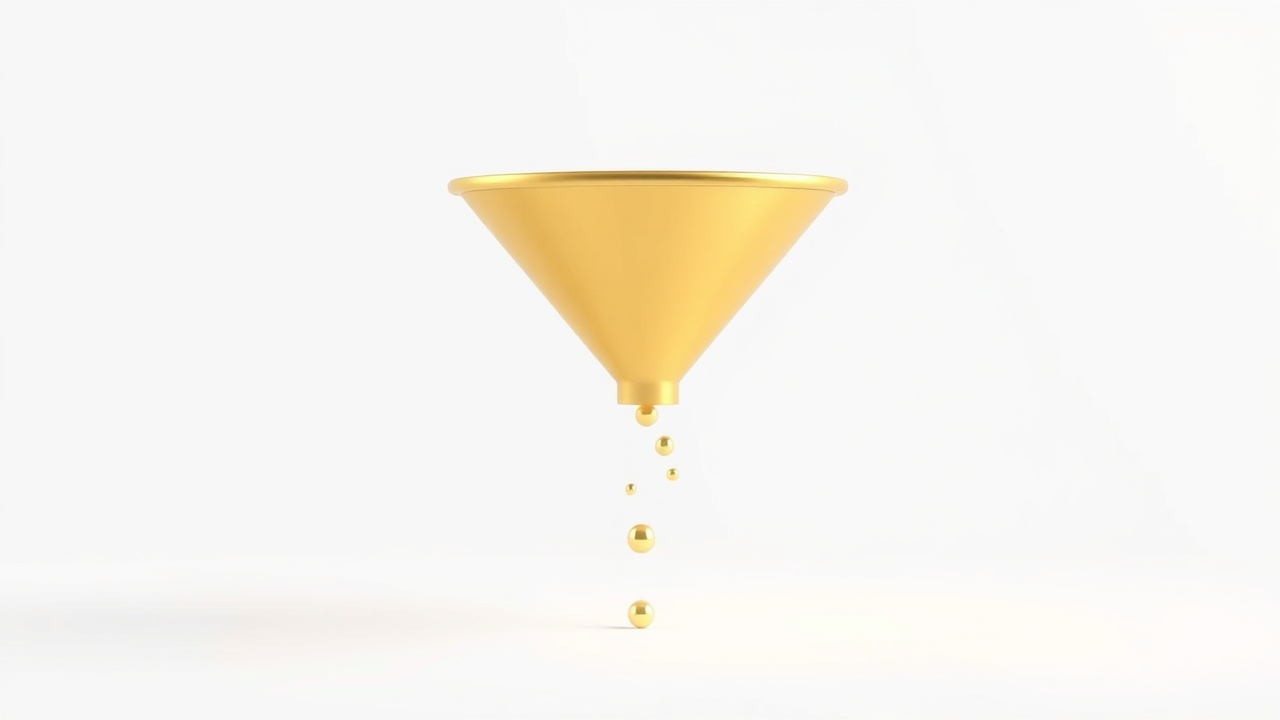
A sales funnel visualizes the customer journey from stranger to buyer. The term "funnel" reflects reality: many people enter at the top, but only a fraction complete a purchase at the bottom. This natural narrowing happens because prospects drop off at each stage—some lose interest, others aren't ready to buy, and a few become loyal customers.
As of 2025, businesses across industries use sales funnels to systematically convert traffic into revenue. Whether you're selling digital products, services, or physical goods, understanding funnel mechanics helps you identify where prospects abandon the journey and how to improve conversions.
The Four Core Stages of a Sales Funnel
Every sales funnel follows a basic structure, though terminology varies by industry. Here are the four essential stages:
1. Awareness (Top of Funnel)
Prospects first discover your brand exists. This happens through search engines, social media, advertisements, word-of-mouth, or content marketing. At this stage, visitors have a problem but may not know solutions exist.
2. Interest (Middle of Funnel)
Prospects engage with your content—reading blog posts, watching videos, or downloading resources. They're actively researching solutions and comparing options. This is where you build trust through valuable information.
3. Decision (Lower-Middle Funnel)
Prospects evaluate your specific offer against competitors. They read reviews, compare pricing, and consider whether your solution fits their needs. Case studies, testimonials, and detailed product information matter most here.
4. Action (Bottom of Funnel)
Prospects become customers by completing a purchase, signing up, or booking a call. Post-purchase, the funnel continues through retention and referral stages for long-term value.
Sales Funnel Stages at a Glance
| Stage | Customer Mindset | Key Content Types | Typical Conversion |
|---|---|---|---|
| Awareness | "I have a problem" | Blog posts, social media, ads | 100% enter |
| Interest | "What solutions exist?" | Guides, videos, email sequences | 30-40% continue |
| Decision | "Is this the right choice?" | Reviews, comparisons, demos | 10-20% continue |
| Action | "I'm ready to buy" | Sales pages, checkout, offers | 3-5% convert |
Concrete Example: Online Course Sales Funnel
Consider an entrepreneur selling a $197 course on freelance writing. Here's how their funnel might work:
Awareness: A blog post titled "How to Start Freelance Writing in 2025" ranks on Google. It attracts 10,000 monthly visitors searching for information.
Interest: The post offers a free PDF checklist in exchange for an email address. About 1,500 visitors (15%) download it and join the email list.
Decision: Over two weeks, subscribers receive emails with success stories, writing tips, and course details. The entrepreneur publishes content using tools like Content Engine to maintain consistent, SEO-optimized articles that build authority.
Action: A limited-time discount email converts 75 subscribers (5% of the list) into course buyers, generating $14,775 in revenue.
This example shows how each stage filters prospects while building trust with those who continue.
Why Prospects Drop Off (and How to Fix It)
Understanding drop-off points improves your funnel performance:
- Awareness to Interest: Weak headlines or irrelevant traffic. Fix by targeting specific keywords and crafting compelling hooks.
- Interest to Decision: Lack of trust or unclear value. Fix by adding social proof, detailed FAQs, and comparison content.
- Decision to Action: Friction in the buying process. Fix by simplifying checkout, offering guarantees, and addressing objections.
Businesses building multiple niche sites often use Site Engine to quickly launch review or blog sites that capture awareness-stage traffic across different markets.
Measuring Sales Funnel Performance
Track these metrics to evaluate your funnel:
- Traffic: Total visitors entering the awareness stage
- Lead capture rate: Percentage who provide contact information
- Email open/click rates: Engagement during the interest stage
- Sales conversion rate: Percentage of leads who purchase
- Customer acquisition cost (CAC): Total spend divided by new customers
- Customer lifetime value (CLV): Revenue per customer over time
Healthy funnels show CLV exceeding CAC by at least 3:1.
Sales Funnel vs. Marketing Funnel
These terms overlap but differ slightly. Marketing funnels focus on attracting and nurturing leads (awareness through interest). Sales funnels emphasize converting leads into buyers (decision through action). In practice, most businesses treat them as one continuous process.
Building Your First Sales Funnel
Start simple with these components:
- Traffic source: One reliable channel (SEO, paid ads, or social)
- Landing page: Clear offer with a single call-to-action
- Lead magnet: Free value in exchange for an email address
- Email sequence: 5-7 emails building trust and presenting offers
- Sales page: Detailed benefits, proof, and purchase option
For content-heavy funnels, having a library of ready-to-customize articles from resources like PLR Engine can accelerate the interest stage by providing immediate value to new subscribers.
Common Sales Funnel Mistakes
Avoid these errors that kill conversions:
- Skipping stages and asking for sales too early
- Targeting broad audiences instead of specific buyer personas
- Neglecting mobile optimization (over 60% of traffic is mobile)
- Failing to follow up with abandoned carts or unconverted leads
- Not testing variations of headlines, offers, and page layouts
Effective funnels require ongoing optimization based on real data, not assumptions.
Get the AI tools to do this — free
Create a free Elite Engines account and get 5 AI engines instantly. No credit card.
Related questions
How much does it cost to build a sales funnel?
Basic sales funnels can be built for under $100/month using tools like email platforms and landing page builders. More sophisticated funnels with automation, paid ads, and custom design typically cost $500-$5,000 to set up, plus ongoing advertising spend. Free options exist but often limit features.
What is the difference between a sales funnel and a landing page?
A landing page is a single web page designed for one specific action, like collecting emails or selling a product. A sales funnel is the entire multi-step journey—landing pages are just one component. Funnels include traffic sources, email sequences, multiple pages, and follow-up processes working together.
How long should a sales funnel be?
Funnel length depends on price and complexity. Low-cost products ($10-$50) can convert in 1-3 steps. Mid-range offers ($100-$500) typically need 5-7 touchpoints over 1-2 weeks. High-ticket items ($1,000+) may require 10+ interactions over several weeks or months to build sufficient trust.
What is a good sales funnel conversion rate?
Average sales funnel conversion rates range from 3-5% of total visitors. Well-optimized funnels achieve 8-15%. Rates vary significantly by industry, price point, and traffic quality. Warm traffic (referrals, email lists) converts at 10-20%, while cold traffic (ads) typically converts at 1-3%.
Do I need a sales funnel for a small business?
Yes, even simple businesses benefit from basic funnels. Without a structured path, visitors leave without converting and are lost forever. A minimal funnel—website, email capture, follow-up sequence—costs little but systematically turns visitors into leads and leads into customers over time.